Should You Grade Your Pokémon Cards? UK Grading Explained
· 4 min read

You should grade a Pokémon card when it is in excellent condition and either valuable, highly sought after or deeply sentimental to you. Grading costs money and takes time, so for most everyday cards it is not worth it. For the right card, though, a grading company authenticates it, gives it a condition score and seals it in a protective case, which can make it easier to sell or simply more satisfying to own.
What grading actually is
When you send a card for grading, a specialist company checks that it is genuine, examines its corners, edges, surface and centring, and gives it a grade on a numbered scale, usually topping out at 10. The card is then sealed in a hard plastic case (a "slab") with a label showing the card details and grade.
A graded card is no longer handled directly, which protects it, and buyers can see an independent opinion of its condition rather than relying on a seller's description.
PSA, CGC and ACE compared simply
There are several grading companies. These three are among the names UK Pokémon collectors mention most often:
- PSA: a long-established American grading company and one of the most widely recognised names in card collecting. Its slabs are familiar to collectors around the world.
- CGC: another large American company, also well known for grading comics, which grades trading cards too. Its slabs and labels have their own distinctive look.
- ACE: a UK-based grading company that is popular with UK collectors, partly because submitting does not involve sending cards abroad.
Beckett is another established name you may come across. Each company has its own grading standards, label designs and reputation with buyers, and opinions differ about which is "better". Fees, service levels and turnaround times vary and change regularly, so always check each company's official website for current details before you submit.
When grading makes sense
- The card is in top condition. A card that is clearly Near Mint or better has the best chance of a strong grade. If you are unsure, read Pokémon card conditions explained first.
- The card is sought after. Popular chase cards, older holos and special illustration cards are the usual candidates.
- You plan to sell. Buyers often feel more confident with an authenticated, graded card.
- It means a lot to you. A first pull, a childhood favourite or a gift can be worth slabbing purely for protection and display.
When it probably isn't worth it
- Common and uncommon cards that are easy to replace.
- Cards with visible whitening, scratches, bends or creases.
- Cards where the grading cost would be more than the card is worth to you or to a buyer.
- Cards you want to play with or flick through in a binder, since slabs do not fit binder pockets.
Before deciding, look up recently sold prices for the same card in raw and graded form. Our guide on how to check what your Pokémon cards are worth explains how to do this without guessing.
How to prepare cards for grading
- Check it is genuine. Grading companies will not grade fakes. See how to tell if Pokémon cards are fake.
- Inspect it honestly. Look at corners, edges and surface under good light. Be stricter than you would be with your own binder.
- Handle it carefully. Clean, dry hands and a soft, clean surface. Do not try to "fix" a card by pressing or cleaning it with anything abrasive.
- Sleeve and protect it. A fresh penny sleeve plus the holder the company asks for. Follow each company's own packing instructions exactly.
- Record everything. Photograph the front and back before sending, and keep proof of postage.
Graded and raw cards together
Most collectors end up with a mix: a small number of slabs and a much bigger binder collection of raw cards. Slabs are best kept upright in a sturdy box or on a display stand, away from direct sunlight. Raw cards, including ones you might grade later, are safest sleeved in a binder with clear pockets. For more ideas, read how to protect rare trading cards.
Keep your raw collection safe
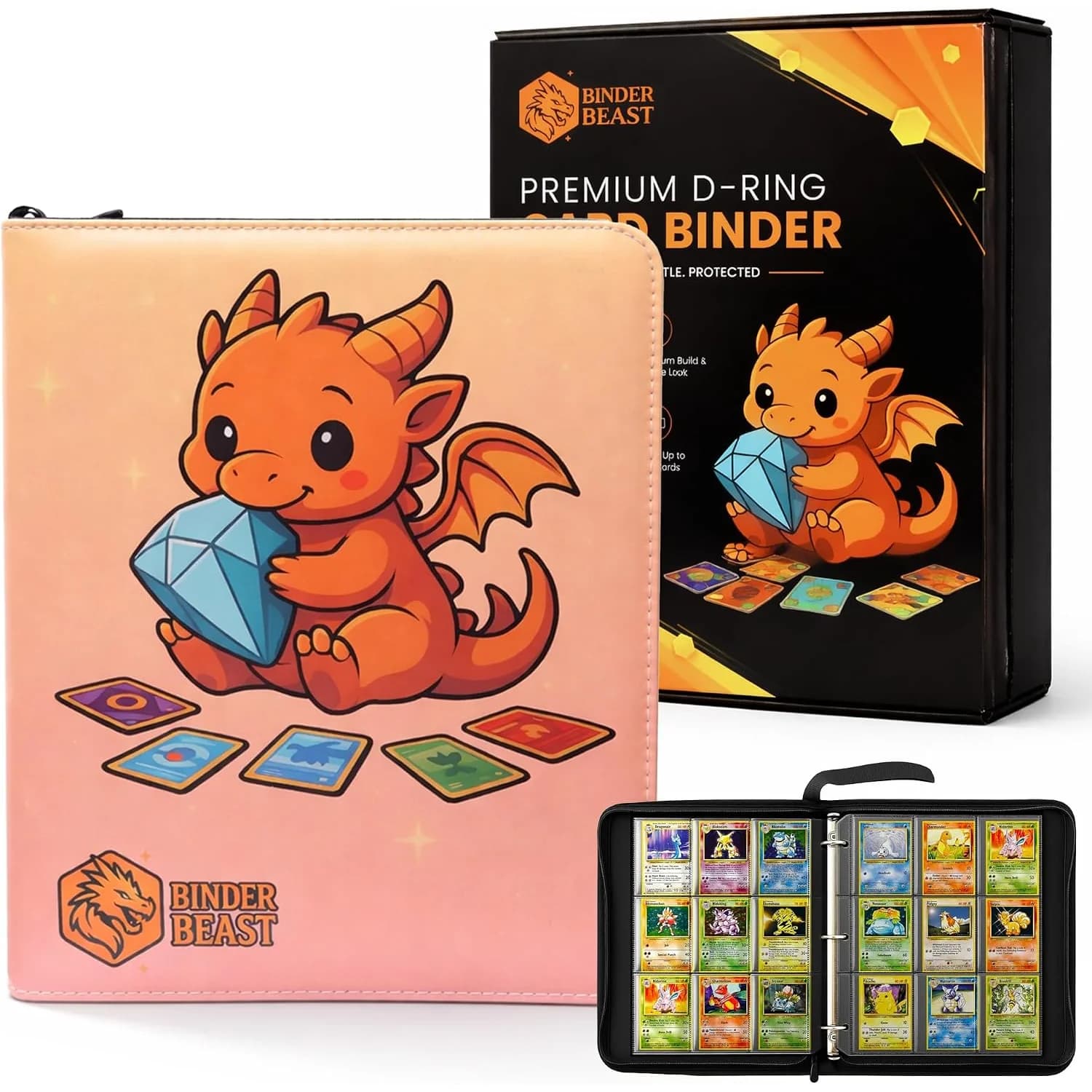
If you are building a collection of cards that might be graded one day, the Dragon 9-Pocket Zip Binder holds up to 900 cards in top-loading 9-pocket pages on a D-ring, so you can add or rearrange pages as your collection grows. The full zip and water-resistant PU leather cover help keep dust and splashes out, and it arrives in a gift box.
Conclusion
Grading is a tool, not a must. Save it for cards that are in great condition and genuinely matter to you or to buyers, compare the companies on their official websites, and keep everything else safely sleeved in a binder. That way you spend money only where it makes a difference.
Find the right binder
360 to 900 cards, water-resistant covers, free UK delivery over £25.
Shop binders