
9-pocket card binders
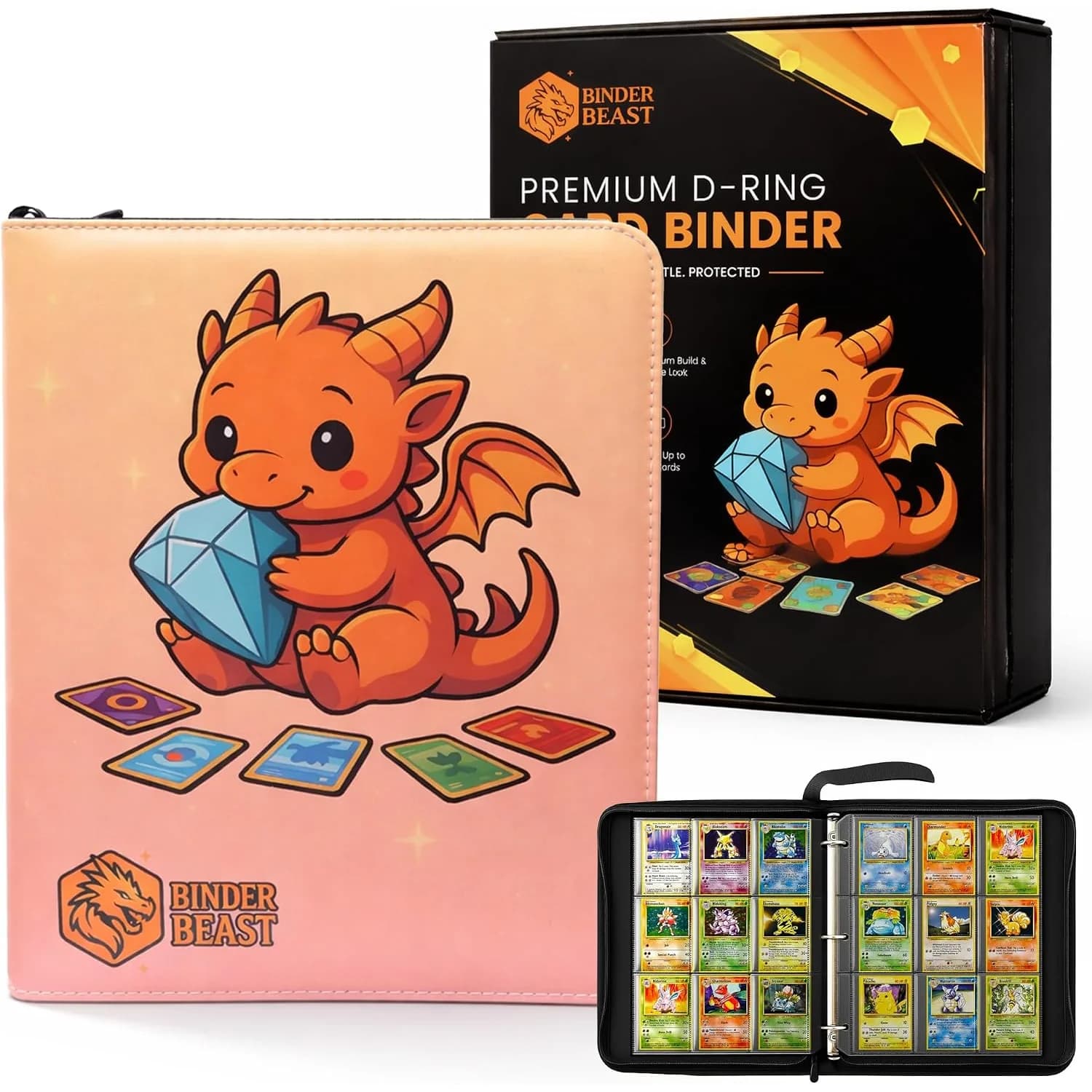
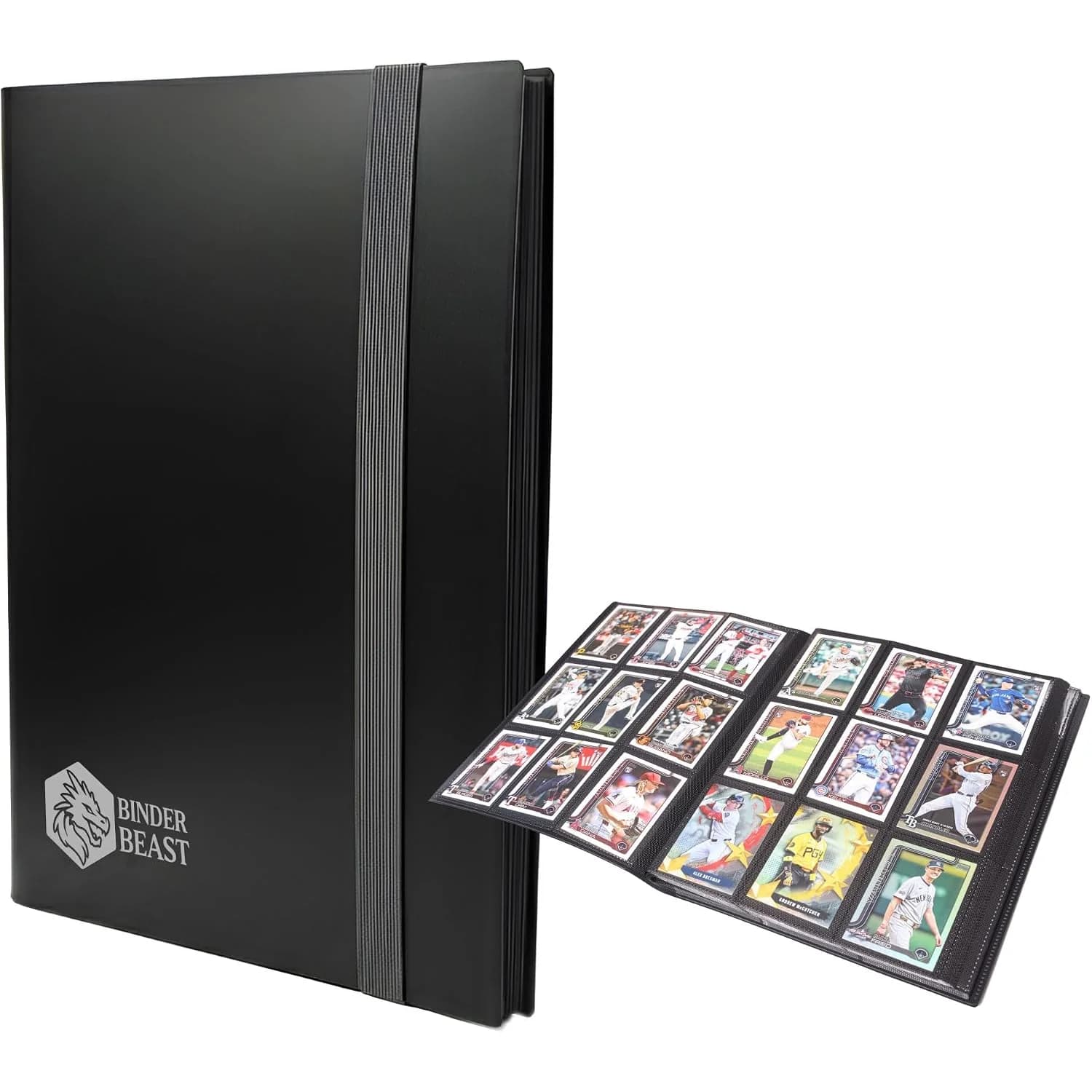
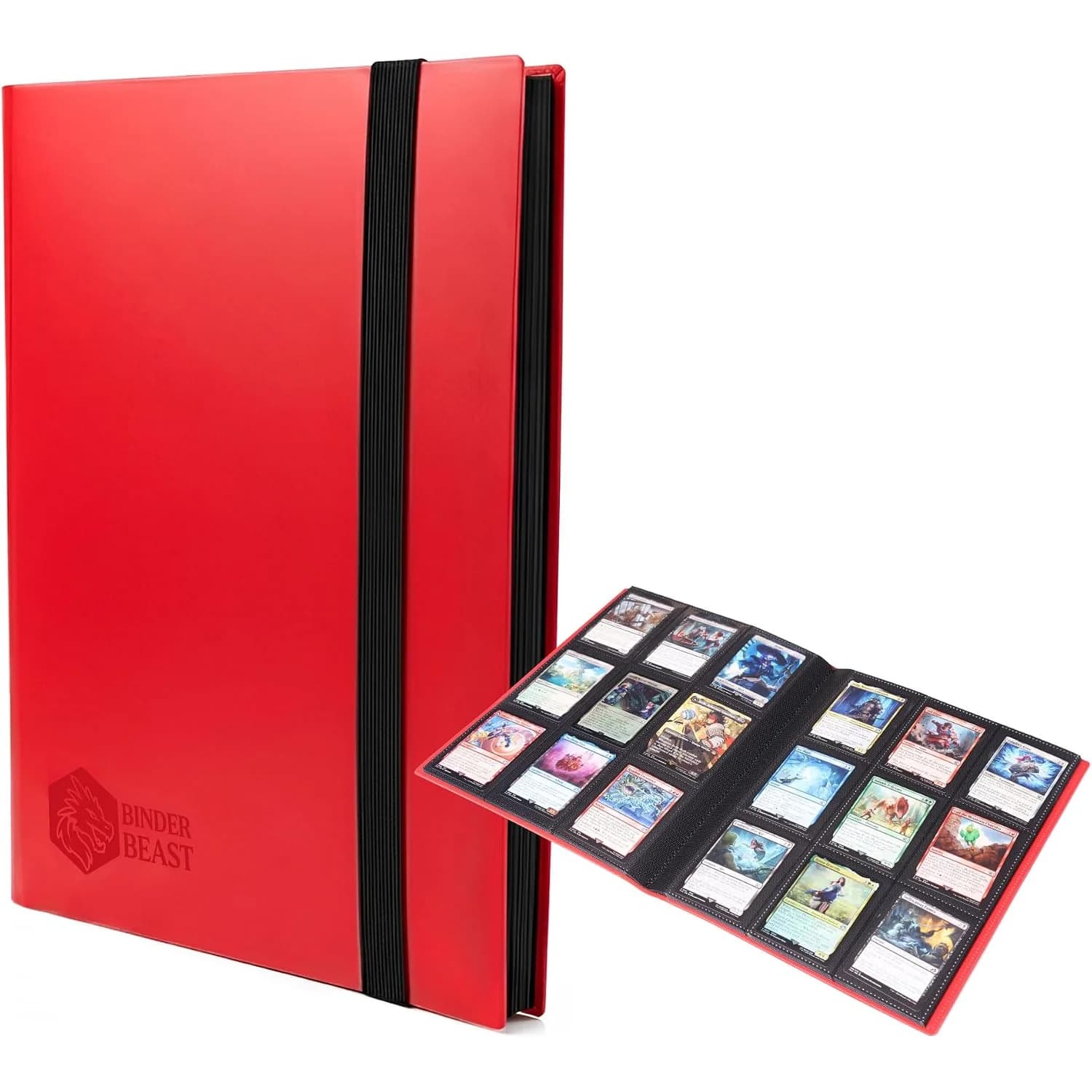
The classic Pokémon binder layout: nine cards a page, three by three, so a full page of a set sits together. Two styles to choose from: the slim, side-loading Sleek, or the 900-card Dragon zip binder.
Why collectors choose 9-pocket binders
A 9-pocket page matches how most sets are laid out and how trade binders are browsed: one spread shows 18 cards at a glance. It's the most space-efficient way to keep a collection flat and visible, and it's the size most Pokémon, Magic and Yu-Gi-Oh! collectors start with. See our 9-pocket card binder buying guide for more.
Sleek or Dragon?
- Sleek Black and Sleek Red: 360 cards on 20 double-sided pages with side-loading pockets, a water-resistant cover and an elastic strap. Slim (30.5 × 24.5 cm) and light enough for a school bag.
- Dragon 9-Pocket: up to 900 cards on top-loading pages held by D-rings, in a water-resistant PU leather case with a full zip and wrist strap. Arrives in a gift box.
Buy a Dragon 9-Pocket and a Sleek together and save 25% on both.
How many cards fit in a 9-pocket binder?
Nine per side, eighteen per double-sided page. Multiply by the number of pages: 20 pages × 18 = 360 cards in a Sleek. More in how many cards fit in a 9-pocket binder, or work out your own numbers with the binder calculator.
Who a 9-pocket binder suits
Set collectors who want each page to read like a checklist. Players who keep a trade binder to flick through at league nights. Parents looking for a first proper binder that keeps a child's cards out of shoeboxes and rubber bands. And anyone with a pile of bulk who wants to see what they actually own.
Side-loading or top-loading?
The Sleek's side-loading pockets open along the side, so cards are less likely to slide out when the binder is tipped or carried. The Dragon's top-loading pockets are quicker to fill, and because its pages sit on D-rings you can move them around as a set grows. If the binder will live in a school bag, side-loading is the safer bet; if you rearrange a lot, top-loading on rings is easier.
Sleeved cards and smaller cards
Both 9-pocket binders take standard-size cards (63 × 88 mm) sleeved or unsleeved; the Sleek's pockets measure 6.9 × 9.7 cm. Yu-Gi-Oh! and Japanese-size cards are smaller, so they fit with room to spare, and a sleeve stops them shifting in the pocket. Very thick sleeves, double sleeves and thick relic cards make pages bulkier, so a full binder may not close as neatly.
Questions
Is a 9-pocket binder good for Pokémon cards?
Yes. It's the standard Pokémon binder size: nine cards a side keeps a set together, and the pockets fit standard-size cards sleeved or unsleeved.
What's the difference between side-loading and top-loading 9-pocket pages?
Side-loading pockets (Sleek) open on the side, so cards are less likely to slip out when the binder is carried. Top-loading pockets (Dragon) are quicker to fill, and the ring pages can be rearranged.
Which 9-pocket binder holds the most cards?
The Dragon 9-Pocket, with room for up to 900 cards. The Sleek holds 360.
Do Yu-Gi-Oh! cards fit a 9-pocket binder?
Yes. Yu-Gi-Oh! cards (59 × 86 mm) are smaller than standard cards, so they fit sleeved or unsleeved. Sleeving them keeps them from moving around in the pocket.
Is a 9-pocket binder good as a trade binder?
Yes. A double-page spread shows 18 cards at once, so people can browse your trades quickly. The slim Sleek, with side-loading pockets and an elastic strap, is easy to carry to league nights and school.