How Much Are My Pokémon Cards Worth? How to Check Properly
· 4 min read

The quickest honest way to find out what your Pokémon cards are worth is to identify each card exactly, judge its condition carefully, then look at what the same card in the same condition has actually sold for recently. Asking prices, gut feeling and "my mate said" are not values. This guide walks through the method step by step, so you can sort your cards into "worth a closer look" and "binder fodder" without guessing.
Step 1: identify the exact card
Two cards showing the same Pokémon can be worlds apart in value, so the first job is pinning down precisely which version you have. Check:
- The set symbol and card number – usually printed near the bottom of the card. Together they tell you which set and which card you are looking at.
- The rarity symbol – a circle, diamond or star (plus newer rarity markings on recent sets) helps separate common prints from rarer ones.
- The finish – non-holo, holo, reverse holo, full art and special illustration cards are usually listed separately on marketplaces and price sites.
- Language and edition – English, Japanese and other languages are priced differently, and on some older cards an edition stamp makes a real difference.
- Promo stamps – small stamps or logos can mark a promotional version of an otherwise ordinary card.
Write down the card name, set, number and finish before you search. It stops you comparing your card with the wrong listing, which is the most common reason people end up with a wildly wrong idea of value.
Step 2: be honest about condition
Condition is where most home valuations go wrong. A card that looks perfect at arm's length can show whitening on the back edges, a soft corner or fine scratches across the holo once you look under a bright light. Check the front and back, all four corners and all four edges, and tilt holo cards to catch surface marks. Our guide to Pokémon card conditions explains the usual categories, from near mint down to damaged, and how to tell them apart.
Always compare like with like. If your card is lightly played, a near mint sale is not your price, however tempting it is to believe otherwise.
Step 3: check sold listings, not asking prices
Anyone can list a card at any price. What matters is what buyers have actually paid. On marketplaces such as eBay you can filter search results to show sold or completed items only. When you look through them:
- Look at several recent sales rather than one unusually high or low result.
- Match the exact card, finish, language and condition.
- Skip listings with vague titles or stock photos – you can't confirm what was really sold.
- Note whether the sale was for a raw (ungraded) card or a graded card in a slab, as these are very different markets.
- Remember postage and selling fees: the sale price is not what the seller actually kept.
Step 4: cross-check with price-guide sites
Price-guide and market-tracking sites gather sales data and show a typical market value for each card, often split by condition and finish. They are handy for a fast first check, especially when you have a whole stack to go through. Treat them as a guide rather than a guarantee: figures can lag behind the market, some sites lean heavily on US sales, and values for less popular cards may be based on very few sales. If a price guide and recent UK sold listings disagree, give more weight to the sold listings for your card in your condition.
Step 5: decide whether grading changes anything
Cards graded by companies such as PSA, CGC or ACE sell as their own category, and the grade has a big effect on what buyers pay. That doesn't mean your raw card is worth a graded figure – grading costs money, takes time and comes with no guarantee of a high grade. If you think you have a card in exceptional condition, read should you grade your Pokémon cards? before deciding.
Watch out for fakes and "misprints"
A card that seems too good to be true sometimes is. Before you get excited, run through the checks in how to tell if Pokémon cards are fake. Be cautious, too, about "error" or "misprint" claims you see online – many so-called errors are ordinary print variation that buyers won't pay extra for.
Quick answer: a simple sorting system
- Pull out anything holo, full art, older or with an unusual rarity symbol.
- Identify each card exactly and note its condition.
- Check recent sold listings for the same card in similar condition.
- Cross-check with one price-guide site.
- Sort into three piles: keep and protect, sell or trade, and bulk.
Card values move over time, so re-check before you sell or trade rather than relying on a figure you looked up months ago.
Protect the cards that matter while you decide
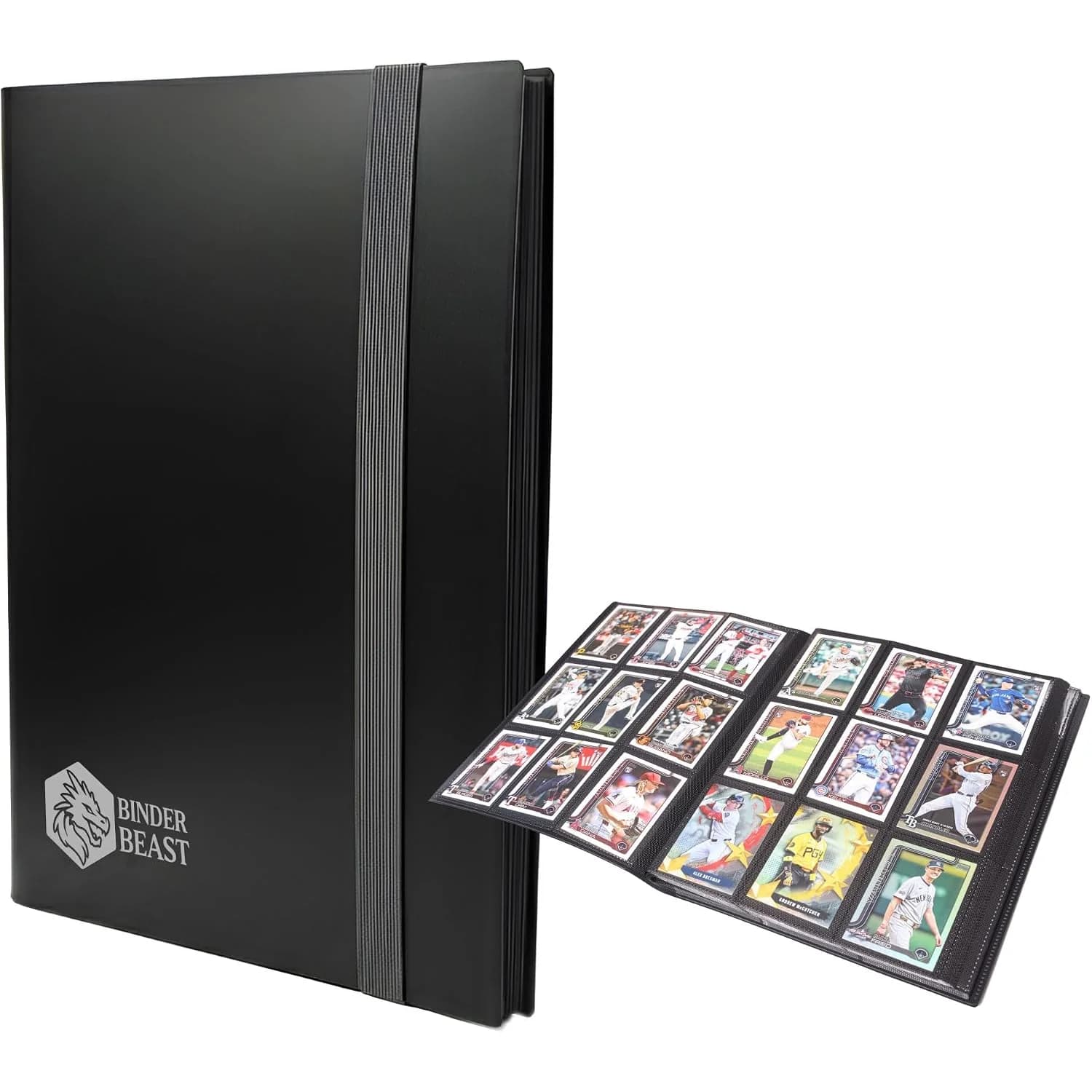
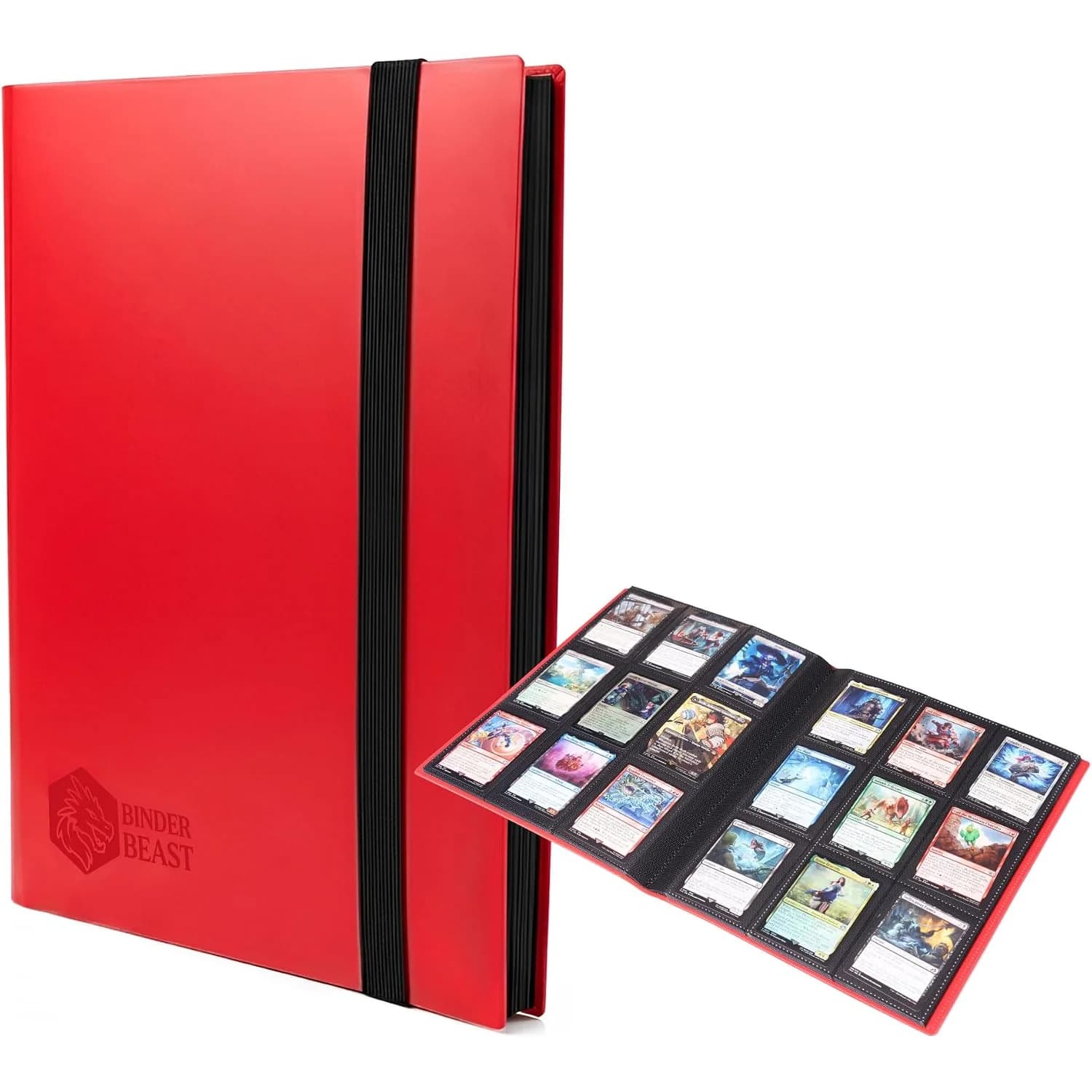
Once you've found cards worth keeping an eye on, the worst thing you can do is leave them loose in a shoebox where corners and surfaces get knocked about – condition is a big part of value. Sleeve them, then store them flat and organised. The Sleek 9-Pocket Binder holds 360 cards in acid-free, crystal-clear polypropylene side-loading pockets, with a water-resistant hardcover and an elastic strap to keep it closed. It fits standard 63 × 88 mm cards sleeved or unsleeved, which makes it a tidy home for a "cards to watch" collection.
Final thoughts
Checking card values isn't about luck. Identify the card exactly, judge its condition honestly, look at what the same card has really sold for and use price guides as a second opinion. Do that and you'll know which cards deserve extra care – and which are simply there to be enjoyed. If you decide to part with some, our guide to selling Pokémon cards in the UK covers the next steps.
Find the right binder
360 to 900 cards, water-resistant covers, free UK delivery over £25.
Shop binders