
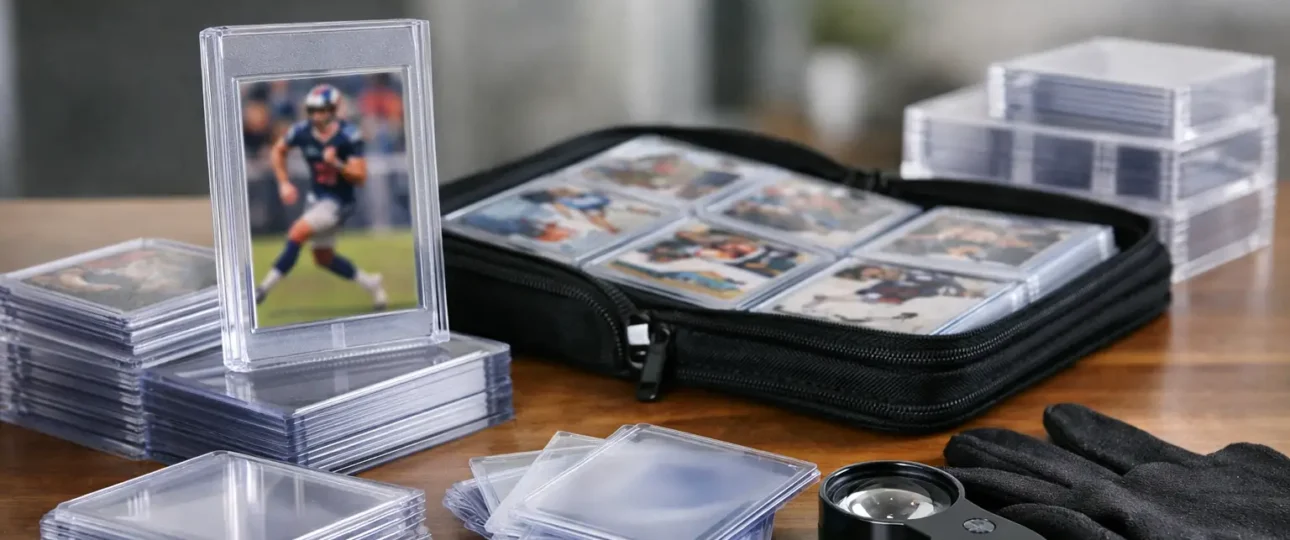
A card can look perfect at the pull, then lose its edge through one careless trip in a backpack or one overfilled page. This sports card protection guide is built for collectors who want their cards to stay clean, flat, organised and ready to enjoy for years – whether you are sorting a childhood collection, building a rookie run or taking trade stock to a card show.
Start with the card’s condition and value
Not every sports card needs the same level of protection. A base card you are keeping for a set can live comfortably in a quality binder pocket. A low-numbered parallel, autograph, vintage card or card you may grade deserves a more cautious setup.
The goal is not to bury every card in layers of plastic. Too much bulk makes storage awkward and can create pressure in a binder. Instead, match protection to the card’s condition, value and how often you handle it. Cards that move regularly need secure, practical protection. Cards held for the long term need a stable environment with minimal handling.
Before sleeving anything, check the surface under good light. Look for soft corners, scratches, print lines and tiny dents. Handle cards by the edges with clean, dry hands. Fingerprints and skin oils are not always obvious immediately, but they can spoil glossy surfaces over time.
The sports card protection guide to sleeves
For most modern sports cards, a penny sleeve is the first line of defence. Choose sleeves made from archival-safe, PVC-free material. They reduce surface scuffs, protect against fingerprints and make it safer to move a card into a binder pocket, rigid holder or storage box.
Place the card into the sleeve gently. Do not force the opening apart with the card’s corners, as this is an easy way to catch or bend an edge. If a card is particularly valuable, use a fresh sleeve rather than one with dust, creases or a cloudy surface.
A soft sleeve is ideal for regular binder storage. For higher-value cards, use a sleeve before placing the card in a semi-rigid holder, top loader or magnetic holder. The sleeve stops the card moving directly against hard plastic, which matters during transport.
There is a trade-off. Rigid holders offer more protection from impacts, but they are bulky and not suited to every collection. A binder gives cleaner organisation and easier viewing, but it will not protect a card against crushing weight. Use each format for what it does best.
Choose a binder that protects, not just stores
A sports card binder should keep cards visible without leaving them exposed. Standard sports cards generally fit standard-size pockets, but card thickness can vary. Memorabilia cards, patch cards and especially thick premium releases may need a different storage solution rather than being squeezed into a normal pocket.
Look for top-loading pockets. They help keep cards from sliding out when the binder is carried or turned upside down. Crystal-clear pockets make it easy to view front and back details without repeatedly removing cards, while properly fitted pages help prevent cards from shifting against one another.
The cover and closure matter more than many collectors realise. A water-resistant outer cover adds protection from minor spills and damp conditions during travel. A zip or secure elastic closure keeps pages contained, limits dust exposure and prevents the binder opening in a bag. It is a simple feature that can save a collection from a very avoidable accident.
Binder Beast binders are designed around that balance: display-worthy organisation with collector-grade features such as top-loading pockets, secure closures and travel-friendly protection. Choose a 4-pocket format when portability and a focused display matter most. A 9-pocket binder is better for set builders and collectors who want more capacity in one organised place.
Do not overfill pockets or pages
One pocket should hold one card, ideally in a sleeve if the card has any personal, financial or grading value. Doubling up cards may seem efficient, but it creates friction, hides condition issues and makes edges more vulnerable when the pages flex.
Avoid packing every page to the limit if the binder already feels tight. Overfilling creates pressure at the spine and can cause pages to bow. Leave room for the binder to close naturally. A clean layout is not only easier to enjoy – it is safer for the cards.
Control moisture, heat and sunlight
Most card damage does not come from dramatic disasters. It comes from slow exposure: a damp garage, a sunny shelf, a hot car or a loft with big temperature swings. Paper stock can warp in humidity, foil cards can curl, and heat can weaken adhesives on patch or relic cards.
Store your binder upright or flat on a stable shelf in a dry room with consistent temperatures. Keep it away from radiators, windowsills, kitchens and bathrooms. Avoid placing heavy items on top, especially if the binder is stored flat.
If you live in a humid area or keep cards in a room that can become damp, consider using silica gel packs nearby in the storage area. Do not place them loose inside card pockets. Their job is to help manage the surrounding environment, not to touch the cards.
Sunlight is equally unforgiving. Even a binder with a premium cover should not sit in direct sun. Fading, discolouration and heat-related warping are difficult, often impossible, to reverse.
Transport cards like you expect a bump
Taking cards to a show, trade night or mate’s house is where many collections pick up avoidable wear. A sleeved card in a basic folder can still bend if it is wedged beside a water bottle, laptop or heavy books.
For binder cards, make sure the closure is fully secured before travelling. Carry the binder in a bag where it can stay upright and supported rather than loose at the bottom. Keep drinks separate. Water-resistant materials provide useful protection from a small splash, but no collector should rely on a binder to survive a leaking bottle.
For premium singles you plan to sell, trade or submit for grading, use a sleeve and appropriate rigid holder. Keep those holders in a fitted storage case so they cannot slide around. If you post cards, protect the holder between firm card or board layers, then use packaging that prevents bending in transit.
Build a routine that keeps the collection sharp
Protection works best when it becomes part of collecting, not a chore you remember after damage happens. Sleeve cards soon after opening packs. Return cards to their assigned pockets after a trade night. Give your binders a quick check every few months for dust, full pockets, warped pages or signs of moisture.
It also pays to organise with purpose. You might arrange by team, player, season, set, insert type or personal favourites. A clear system means less unnecessary handling, and less handling means fewer chances for corner wear and surface scratches.
For the cards that matter most, keep a simple record of what you own and where it is stored. Photographs and notes on condition can be useful for insurance, selling, trading and spotting changes over time. This is especially worthwhile for signed cards, short prints and vintage pieces.
A great collection is meant to be looked through, shown off and remembered. Give every card the level of protection it has earned, then enjoy turning the pages with confidence.