
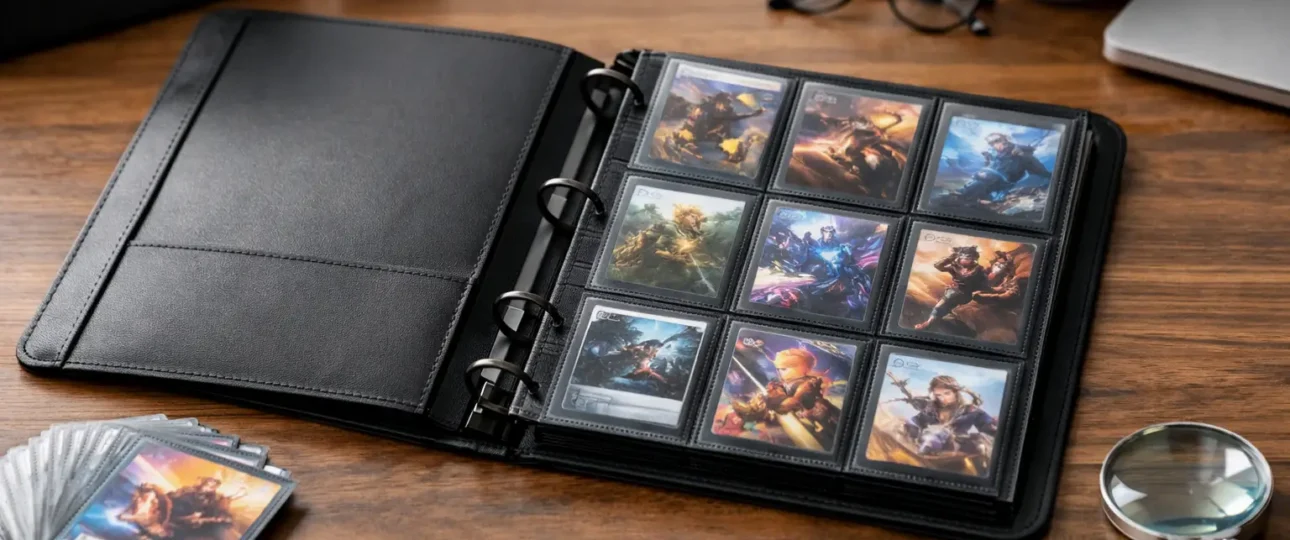
A bent corner after one trip to locals is enough to make any collector rethink their storage. A 9 pocket card binder is not just a way to stack pages neatly on a shelf – it is the difference between a collection that stays sharp and one that slowly picks up wear every time you move it, browse it or take it out with you.
For many collectors, the 9-pocket format hits the sweet spot. It gives you a familiar layout, strong page capacity and an easy way to view full sets, playsets and themed pages without making the binder awkward to handle. If you collect Pokémon, Yu-Gi-Oh!, Magic: The Gathering or standard sports cards, this is often the format that feels the most natural once your collection starts growing beyond a small starter album.
Why a 9 pocket card binder works so well
The biggest advantage of a 9 pocket card binder is visibility. Nine cards per page gives you a clean 3×3 layout that makes sorting, browsing and showing off your collection feel straightforward. Full-art cards, set runs and colour-matched pages all look better when the layout is balanced.
It also suits the way many collectors build their collections. If you keep playsets, chase cards, favourite characters or team collections together, a 9-pocket page gives you enough room to group cards logically without flipping pages every few seconds. Smaller binders can be easier to carry, but they do not always give your collection room to breathe.
There is a practical side too. Larger page layouts can reduce overstuffing across multiple albums, which helps keep your storage more consistent. Fewer binders on the shelf means less clutter and less chance of cards being moved around unnecessarily.
What to look for in a 9 pocket card binder
Not all binders protect cards equally. Two products can look similar in photos and perform very differently once they are full.
Pocket loading style matters
Top-loading pockets are popular because they make it simple to insert and remove cards while still keeping pages tidy. For many collectors, they offer the best balance between accessibility and protection, especially when the binder itself closes securely.
Side-loading pockets can add extra resistance against cards slipping during movement, but the real result depends on page quality and binder construction. If you travel often, closure type and page stability matter just as much as loading direction.
Closure is more than a nice extra
A zip binder adds another layer of protection against dust, accidental opening and cards shifting in transit. An elastic strap can still do the job for home storage, but it is usually a lighter-duty option. If your binder is going in a backpack, tote or event bag, a stronger closure gives better peace of mind.
Cover material affects daily use
A water-resistant PU leather exterior is a smart upgrade over basic card albums. It gives the binder a cleaner finish, holds up better to regular handling and adds a useful barrier against light spills or damp surfaces. That does not mean a binder is waterproof, but it does mean your collection has a better first line of defence.
Clear pockets improve display
Collectors do not buy premium cards just to hide them behind cloudy plastic. Crystal-clear pockets make a real difference, particularly if you enjoy reviewing your pages or showing your collection to friends. Better clarity also makes set checking easier when you are sorting by number, rarity or artwork variation.
Capacity: how much is enough?
A common mistake is buying for your current collection instead of your next six months. A 9 pocket card binder can come in different capacities, and choosing the right one depends on how you collect.
If you are building a focused collection, such as one set, one deck core or a small personal favourites binder, a lower-capacity option keeps things compact and easier to handle. If you collect broadly across multiple sets or keep large runs together, a bigger binder saves you from outgrowing it too quickly.
There is a trade-off. Higher-capacity binders reduce the number of albums you need, but they also become heavier when full. That is fine for shelf storage, less ideal if you carry it around often. For tournament players and collectors who travel to trade nights, portability should matter just as much as page count.
D-ring binder or fixed-page binder?
This depends on how often you rearrange your collection. D-ring binders are useful if you like adding, removing or reorganising pages regularly. They offer flexibility and can be ideal for collectors who sort by set progress, update pages often or want room to expand gradually.
Fixed-page binders usually feel slimmer and more secure because the pages are built in. There is less chance of pages shifting around, and many collectors prefer the cleaner, more unified feel. If your priority is a stable album for long-term storage and presentation, fixed-page often makes more sense.
The trade-off is simple. D-ring gives flexibility. Fixed-page gives a more locked-in format. Neither is automatically better – it depends on how you collect.
Sleeves, fit and card safety
A good 9 pocket card binder should fit standard-size trading cards comfortably, including popular TCG and sports card dimensions. For valuable cards, most collectors will want to use sleeves as well. That extra layer helps protect surfaces from scratches and reduces wear during insertion and removal.
The key is pocket sizing. A binder should hold sleeved cards without feeling tight or forcing corners. At the same time, you do not want oversized pockets that let cards slide about. Proper fit is one of those details you stop thinking about when it is done right, and notice immediately when it is not.
If you use thicker sleeves, always account for the extra bulk when judging capacity. A binder advertised for a certain card count may hold less comfortably once every card is sleeved. That is not a flaw – it is just the reality of better protection.
When a 9-pocket binder is the best choice
A 9-pocket layout is ideal when presentation matters as much as storage. Set collectors love the symmetry. Sports card collectors appreciate the clean display. TCG players often prefer the broader view when checking deck staples, trades or collection gaps.
It is also a strong option for gifts. If you are buying for a child or teen collector, the 9-pocket format feels substantial without being confusing to use. It looks premium, stores a meaningful number of cards and gives the collection a proper home instead of leaving cards in loose tins or stacked deck boxes.
For adult collectors, it offers that balance between display-worthy and practical. A binder should look good on the shelf, but it should also survive regular use. That is where materials, closure and page quality earn their keep.
Signs a binder is too basic for a serious collection
If the cover feels flimsy, the pages look hazy, or the binder bulges once partially filled, it is probably a short-term fix rather than a proper storage solution. Cheap albums often save money by cutting corners on page clarity, stitching, cover structure and closure strength.
That matters more than many collectors expect. Weak construction can lead to page sagging, pocket stretch and a generally untidy fit over time. Even if your cards stay technically inside the binder, the storage experience ends up feeling careless.
Serious collectors usually want more than that. They want a binder that protects cards, travels well and still looks sharp after months of regular use. That is exactly why premium formats have gained so much ground. Brands such as Binder Beast focus on that upgrade – practical protection, stronger materials and a cleaner collector look.
Choosing the right 9 pocket card binder for your collection
Start with how you actually use your collection. If the binder mostly stays at home and you like rearranging pages, a D-ring format may suit you. If you want a neater album with built-in structure, fixed-page is often the stronger choice.
Then think about transport. If the binder will leave the house regularly, prioritise secure closure, stable pages and a cover that can take a bit of punishment. If it is mainly for shelf storage and occasional browsing, you may care more about display clarity and overall finish.
Finally, buy with growth in mind. Most collections do not stay the same size for long. A binder that feels slightly roomy now is usually a better investment than one you fill within a month.
A good binder does more than hold cards. It keeps your collection ready to browse, ready to show and ready to last – which is exactly what serious collectors should expect.