
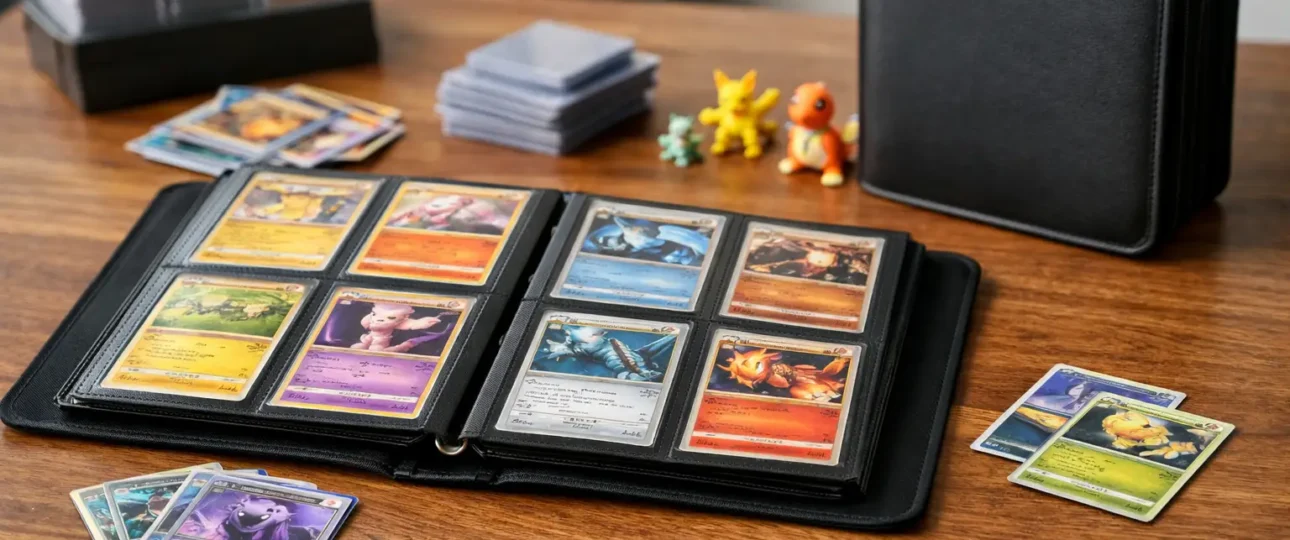
The best trades often happen because someone can see the card they need in seconds. A smart pokemon trade binder setup turns a stack of duplicates into a clean, protected trading tool – one that looks good across a table, travels safely and keeps your personal collection out of the negotiating pile.
That distinction matters. Your trade binder is not just overflow storage. It is a working display for cards you are genuinely willing to move. Set it up with a clear purpose, and you will spend less time flipping through pages, avoid accidental trades and make a stronger impression at every meet-up, league night or event.
Start Your Pokemon Trade Binder Setup With a Clear Boundary
Before filling a single pocket, decide what belongs in the binder. The simplest rule is this: only place cards in it that you would seriously consider trading or selling. Keep your favourite Pokémon, sentimental pulls, deck staples and long-term holds in a separate collection binder or secure storage.
This boundary protects you from the classic trade-table mistake: someone spots a card that was meant to stay in your collection, you feel pressured to discuss it, and the whole interaction gets awkward. A dedicated trade binder lets you say yes, no or maybe with confidence because every visible card already has a purpose.
It also helps to set a minimum standard for condition. Near-mint cards, clean reverse holos, desirable promos and playable trainers generally deserve binder space. Heavily played cards can still be useful, but group them together and be upfront about their condition. Good organisation builds trust before the conversation even begins.
Choose the Right Binder Size and Pocket Layout
Your binder format should match the way you trade. A compact 4-pocket binder is brilliant for a curated selection of higher-value cards. It is easier to carry, easier to hand across a table and less overwhelming for someone browsing. If you attend local events or trade between games, a smaller binder gives you control without carrying your whole duplicate collection.
A 9-pocket binder suits collectors with plenty of hits, playables, promos and set duplicates ready to move. It creates a bigger visual impact and makes it easier to keep whole categories together. The trade-off is weight. A fully loaded large binder can become bulky, particularly if you are travelling with decks, a playmat and other supplies.
Look for top-loading pockets, clear pages and a secure closure. Top-loading pockets help cards stay in place when the binder is held upright, while crystal-clear pages allow artwork and condition to show properly. A zip closure gives greater protection for a binder packed into a bag, whereas an elastic closure can work well for lighter, everyday carry.
For collectors who like to adjust pages as their trade stock changes, a D-ring format offers flexibility. Fixed-page binders are usually slimmer and feel more streamlined, but removable pages make it simpler to expand a section or remove cards before an event. Neither is automatically better. Pick the format that suits how often you refresh your stock.
Protect cards before they reach the pockets
Use penny sleeves or quality inner sleeves for any card with meaningful value, foil surfaces or edges you want to keep clean. A sleeved card in a properly sized pocket has an extra layer of defence against handling, surface scuffs and pocket friction.
Avoid forcing thick cards into standard pockets. Textured promos, full arts and standard cards usually fit comfortably when sleeved, but top loaders and oversized cards need separate protection. A binder should hold cards flat and naturally, never under pressure.
Organise for Browsing, Not Just for Your Own Memory
A trade binder should make sense to a stranger within a few turns of the page. Alphabetical order can work, but it is rarely the fastest system at a trading table. Most collectors browse by what catches their eye, what they collect or what they need for a deck.
Start with your strongest pages. Place the cards most likely to start a conversation near the front: popular Pokémon, desirable illustration rares, chase cards, clean vintage pieces or current playable staples. You are not trying to show off every card you own. You are making it easy for the right trader to find a reason to keep looking.
After that, organise by one consistent category. You might group cards by rarity, set, Pokémon type, era or value tier. For a modern-focused binder, keeping ex cards, illustration rares and trainer cards in their own sections works well. For a mixed collection, separating vintage, modern and promotional cards prevents the pages from feeling random.
If you trade largely for deck building, put playable cards together even if they come from different sets. A player looking for trainers, energy acceleration or a specific evolution line will appreciate a page that solves a real need. If your audience is mostly collectors, grouping by character or artwork style may earn more attention.
Keep duplicate quantities under control
You do not need six copies of the same low-value holo taking up an entire page. One or two visible copies are usually enough, with any extras stored behind the first card or kept in a labelled box. This keeps pages fresh and gives more cards a chance to be seen.
For higher-demand playables, showing multiples can be useful. Just make the quantity clear before agreeing a trade. If you use a card behind another card in the same pocket, check that both are sleeved and that neither is being bent or obscured in a way that causes confusion.
Build Pages That Make Trading Easier
Visual order affects how your binder feels. Align card orientation, avoid empty pockets in the middle of a page and keep the front-facing card clean. Small details make a collection look cared for, which reassures other traders that you understand condition and value.
Try to keep value ranges reasonably close within a page. Putting a major chase card next to bulk can make price discussions harder and may draw attention away from everything else. It is often better to create a premium section at the front, a mid-range section in the middle and a clearly marked budget or bulk-trade section towards the back.
You can also use divider pages to separate categories. A simple label for “Hits”, “Playables”, “Promos” or “Vintage” helps people browse independently while you look through their binder. If labels are not your style, let page order do the work, but keep it consistent.
Do not overcrowd the binder with cards that are technically available but unlikely to interest anyone. Refresh it after each event. Remove traded cards, replace anything that no longer fits your goals and move newly pulled duplicates into their proper section. A smaller, sharper binder usually performs better than a packed one full of filler.
Protect Your Trade Binder on the Move
A trade binder gets handled more than a display binder, so its exterior matters as much as its pages. A water-resistant PU leather cover gives useful protection against spills, damp bags and everyday knocks, while a structured outer shell helps prevent page bends during travel.
Keep the binder flat in your bag where possible. Do not wedge it under a heavy deck box or place drinks beside it at an event. If you are bringing high-value cards, carry the binder yourself rather than leaving it unattended on a chair or table. Secure closures are valuable here: they stop pages opening and cards slipping out when your bag is moved.
Before trading, inspect key cards under decent light. Check corners, edges, foil scratching and centring, then describe condition honestly. A clean, collector-grade binder earns confidence, but clear communication is what keeps trades fair.
Let Your Binder Support Smarter Trades
Your trade binder does not need to be a museum, a price guide or a complete record of every duplicate. Its job is to put the right cards in front of the right people while protecting them properly. That means leaving room for your taste, whether you build around Scarlet & Violet hits, older favourites, competitive staples or a mix of all three.
A premium binder from Binder Beast gives that setup the structure it deserves: clear pockets for display, secure protection for travelling and a polished look that matches the cards inside. Keep your pages current, your collection boundary firm and your best trade opportunities easy to find. The next great trade may begin with someone simply asking to see your binder.