How to Plan a Binder for a Full Pokémon Set
· 4 min read

To plan a binder for a full Pokémon set, count the cards on the set's checklist, add any secret rares or extras you want to include, then divide by 18, the number of cards on one double-sided 9-pocket page. Round up, add a page or two for spares, and you have your page count. From there, choose a binder with enough capacity: a Sleek 9-pocket binder holds 360 cards on 20 pages, while the Dragon 9-Pocket Zip Binder holds up to 900. Here is how to do it step by step.
The basic binder maths
- A 9-pocket page holds 9 cards per side.
- A double-sided page holds 18 cards.
- A 20-page binder such as the Sleek holds 20 × 18 = 360 cards.
So the formula is simple: cards in the set ÷ 18 = pages needed, rounded up. For more on capacity, see how many cards fit in a 9-pocket binder.
Step 1: Decide what "full set" means to you
Before counting, decide on scope. Collectors usually mean one of these:
- The main set: every card up to the printed set number.
- Main set plus secret rares: the cards numbered beyond the printed total.
- A master set: every card including reverse holo versions and other variants, which can be much larger.
A master set can double the pocket count or more, so get this right first. Our master set binder example shows how one looks in practice.
Step 2: Count and calculate
Use the set's official checklist to count cards, then apply the formula. Some worked examples using round numbers:
- A 150-card set: 150 ÷ 18 = 8.3, so you need 9 pages. That leaves 12 empty pockets for extras.
- A 200-card set: 200 ÷ 18 = 11.1, so you need 12 pages, with 16 pockets spare.
- A 360-card scope: exactly 20 pages, which fills a Sleek binder completely with no room to spare.
- A 500-card master set: 500 ÷ 18 = 27.8, so 28 pages. That is beyond a 20-page binder, so you would need a larger binder or two binders.
Step 3: Plan the page layout
Most collectors place cards in set-number order, starting top left and reading across each row. With 9 pockets per side, card 1 sits top left of the first page, card 9 bottom right, and card 10 starts the reverse side. A quick tip: write the card number range for each page on a checklist, such as "Page 3 front: 37–45", so you always know where a card belongs.
You can also start each page side with a new evolution line or type, but this tends to leave gaps. For more approaches, read how to arrange cards by set.
Step 4: Leave room for spares
Plan for more pockets than the bare count:
- Empty pockets for missing cards: leave a pocket for every card you do not have yet, so the order stays correct as you fill it.
- Promos and extras: add a page at the end for promos or alternate versions you want alongside the set.
- Trade spares: keep duplicates elsewhere, ideally in a separate trade binder, so the set binder stays tidy.
Step 5: Choose fixed pages or a D-ring
This is the key decision when planning a full set.
Fixed-page binders
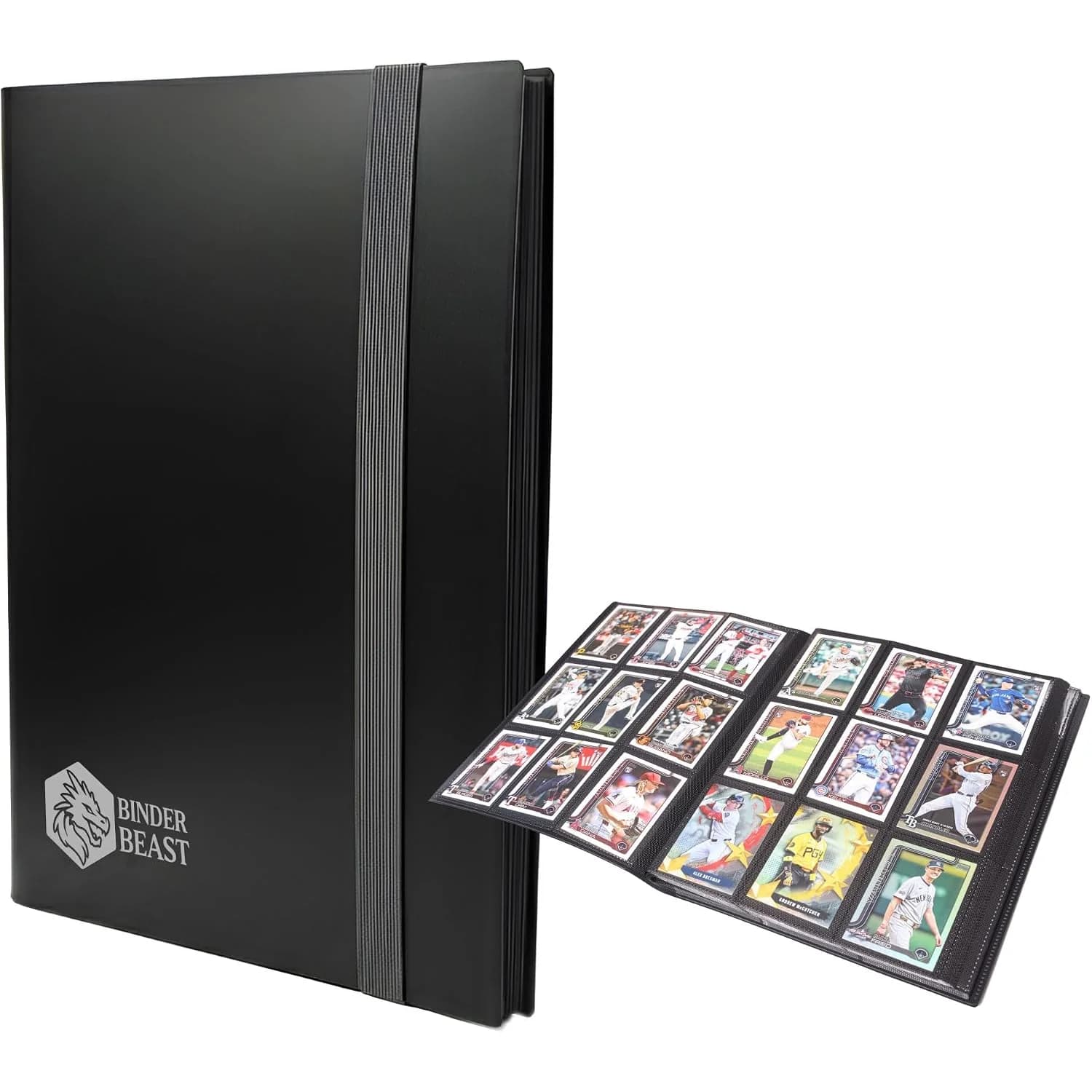
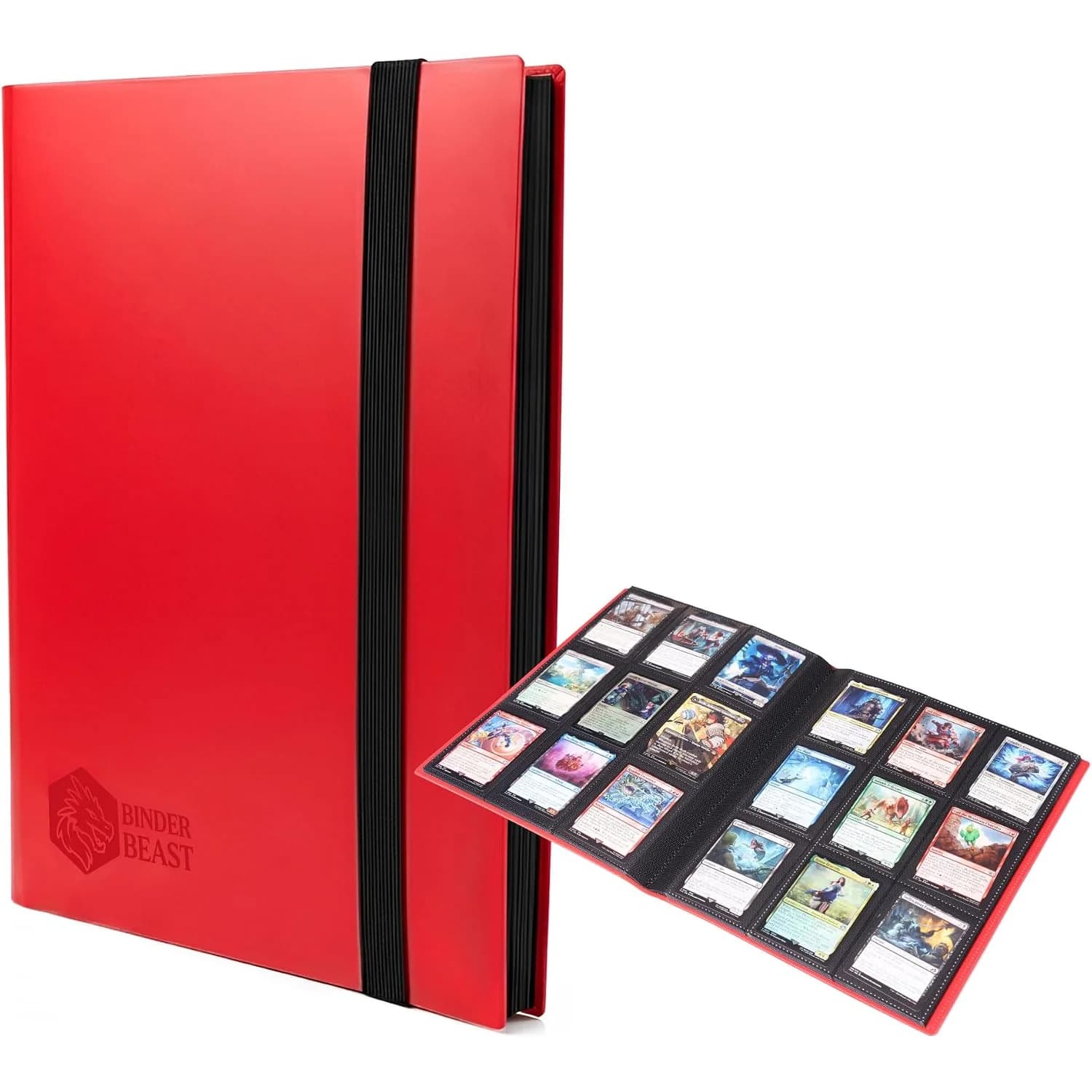
The pages cannot be added or moved, so the capacity is the capacity. That suits a set you know will fit. The Sleek 9-Pocket Binder (£9.99, black or red) holds 360 cards on 20 fixed, double-sided pages with side-loading pockets and acid-free crystal-clear polypropylene pages. It is a neat, affordable choice for a main set that comes in under 360 cards, and its pocket size fits standard cards sleeved or unsleeved.
D-ring binders
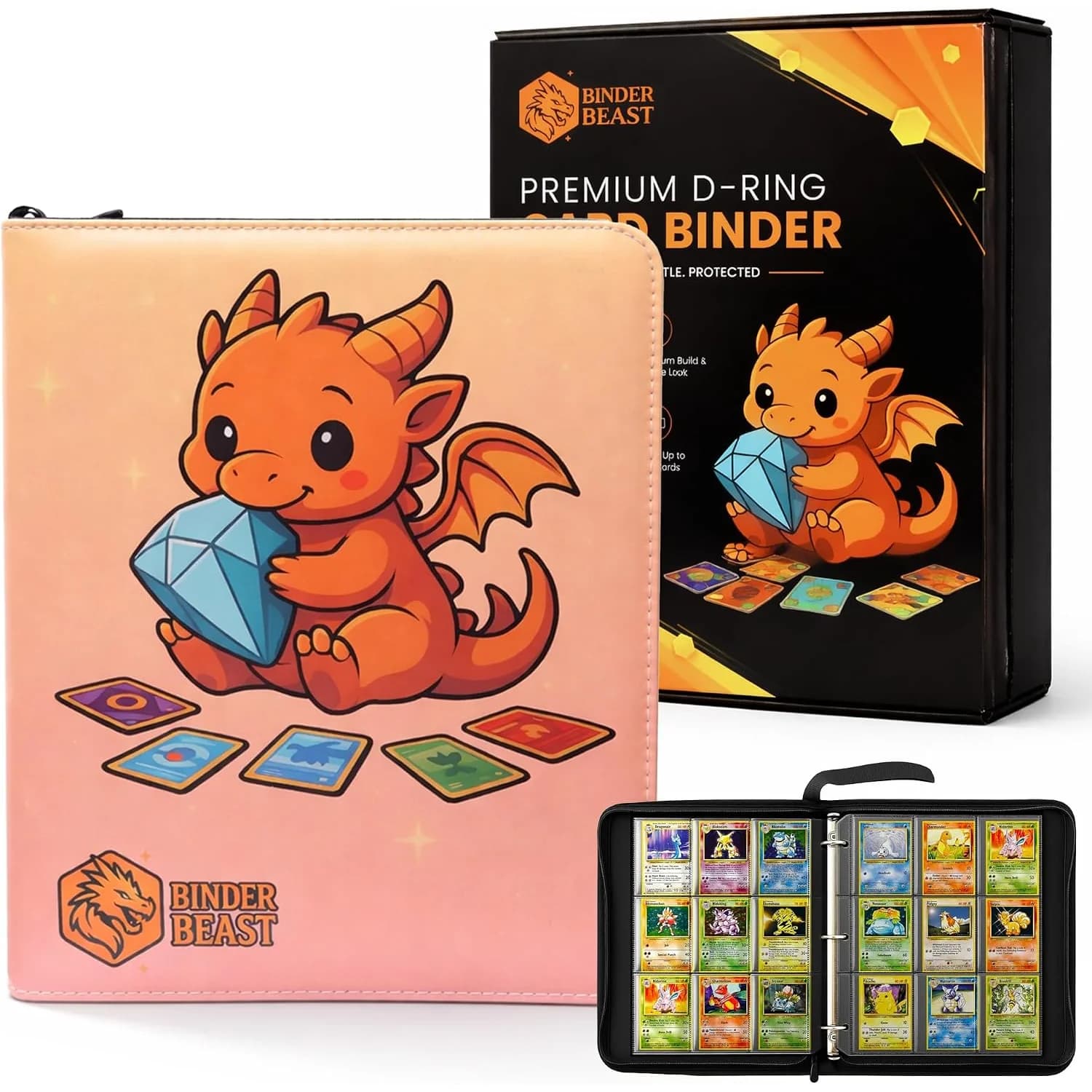
Pages can be added or rearranged, which helps with master sets, or if you change your mind about including secret rares. The Dragon 9-Pocket Zip Binder (£18.99, RRP £24.99) holds up to 900 cards on top-loading 9-pocket pages, with a full zip, wrist strap and water-resistant PU leather cover. It is the better choice for larger scopes, such as that 500-card master set example.
Still unsure on capacity? Our guide to choosing binder capacity goes into more detail.
Quick answer
Divide the number of cards in your chosen scope by 18 and round up to get the number of 9-pocket pages. If it is 20 pages or fewer, a 360-card Sleek binder works. If it is more, or the scope may grow, choose a binder with up to 900-card capacity, such as the Dragon 9-Pocket Zip Binder.
Final thoughts
Planning before you start saves a lot of reshuffling later. Decide what counts as the full set, do the simple 18-per-page maths, leave pockets for missing cards and extras, and choose a fixed-page or D-ring binder to match. Then enjoy watching the gaps fill up.
Find the right binder
360 to 900 cards, water-resistant covers, free UK delivery over £25.
Shop binders