Card Binder vs Storage Box: Which Is Better for Your Cards?
· 4 min read

For most collectors the answer is both: a binder is better for cards you want to see, show off and find quickly, while a storage box is better for bulk – commons, duplicates and energy cards you rarely look at. The real question isn't which one to buy, it's which cards go where. Here's how to decide.
What a card binder does well
- Display – every card is visible, front facing, page by page. Perfect for sets, favourite artwork and trade binders.
- Individual protection – each card sits in its own pocket, so cards don't rub against each other.
- Organisation – it's easy to sort by set, number, type or colour and spot gaps at a glance.
- Portability – a closed binder travels well to school, a friend's house or a local game shop.
The trade-offs are space and cost per card. A binder holds a set number of cards, and storing commons in pockets costs more per card than dropping them in a cardboard box.
What a storage box does well
- Bulk capacity – boxes hold large numbers of cards in a small footprint.
- Low cost – ideal for cards you don't need to look at often.
- Deck storage – players often keep sleeved decks in a deck box, ready to play.
- Easy sorting – dividers make it simple to file cards by set or type.
The trade-offs: cards stacked together can rub, edges catch as you flick through, and you can't see anything without digging. Cardboard boxes also offer very little protection from spills or damp.
Binder vs box at a glance
- Best for display: binder.
- Best for bulk: storage box.
- Best for valuable singles: sleeved in a binder, with a toploader for your very top cards.
- Best for decks: a deck box.
- Best for carrying: a binder with a secure closure.
- Cheapest per card: storage box.
Which cards should go in a binder?
A simple rule: if you'd be upset to find it scratched or bent, it doesn't belong loose in a box. Put these in a binder:
- Holos, full arts and other rares.
- Cards you're collecting into a set, so you can see the gaps.
- Your trade stock, so people can browse without handling every card.
- Anything with artwork you love.
If a card is particularly valuable, read binder or toploader? to decide when rigid protection makes more sense.
Which cards can stay in a box?
Commons, uncommons, duplicates, basic energy and bulk you might trade or give away later are perfectly fine in a decent box, as long as it lives somewhere dry. Keep cards upright and snug – not so tight that they bend, not so loose that they slide about and scuff. A few dividers labelled by set will save you hours later.
What to look for in a binder
Not all binders are equal, and a poor one can do more harm than a box. Look for:
- Good page material. Pages described as acid-free polypropylene are a sensible choice for long-term storage.
- Sensible ring design. Fixed-page binders have no rings at all; ring binders let you add and rearrange pages. If you choose rings, our guide on preventing binder ring dents is worth a read.
- The right pocket type. Side-loading pockets help stop cards sliding out if the binder is tipped; top-loading pockets are quick to fill. See side-loading vs top-loading pockets.
- A secure closure. An elastic strap or a zip keeps the binder shut in a bag.
- A water-resistant cover for extra peace of mind against spills.
A practical setup that works
- One binder for your main collection or the set you're working on.
- A second binder for trades, if you trade.
- A storage box for bulk, sorted with dividers.
- A separate box for toploaded or graded cards, kept somewhere safe.
This keeps your best cards protected and on show, while bulk stays out of the way but still easy to find.
Binders worth a look
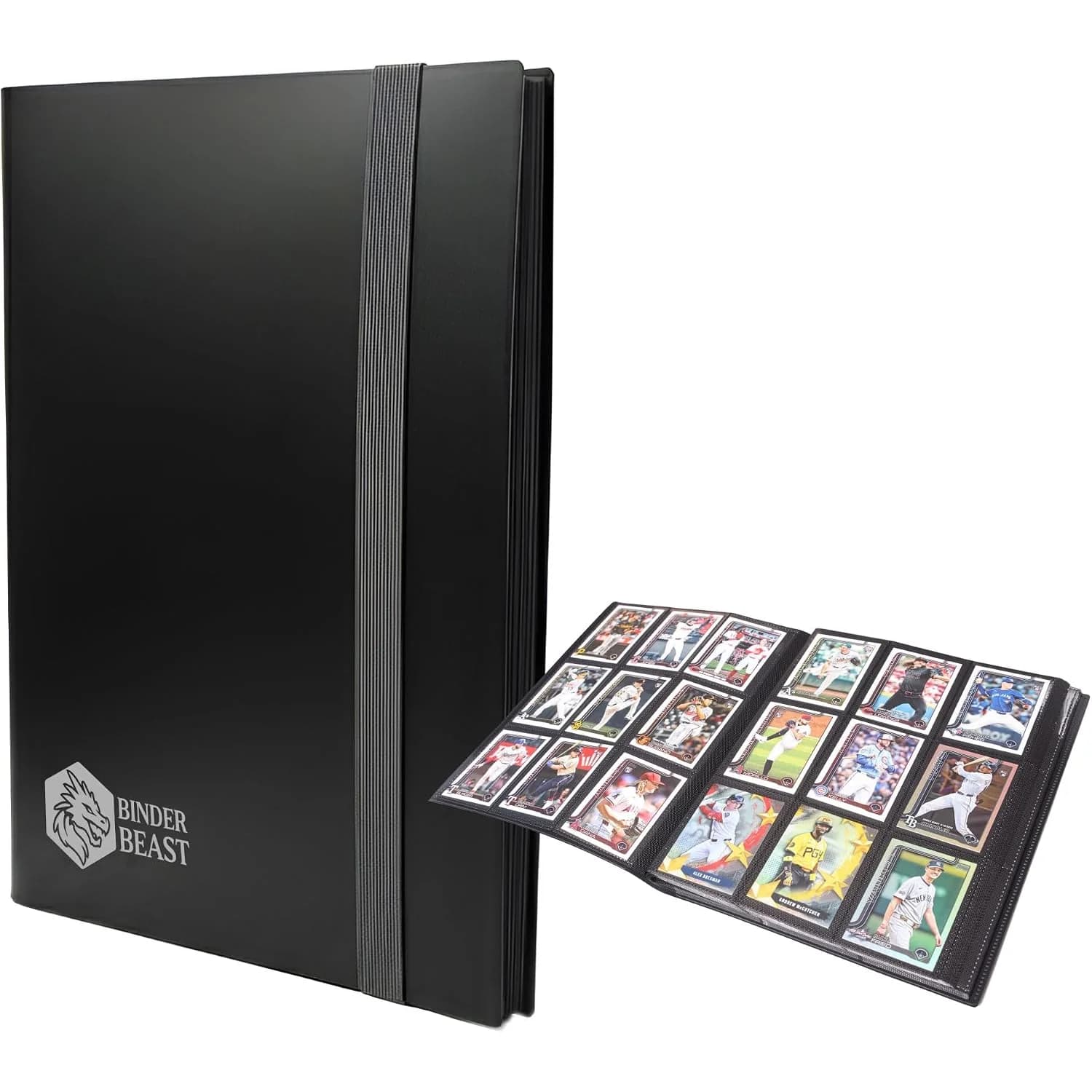
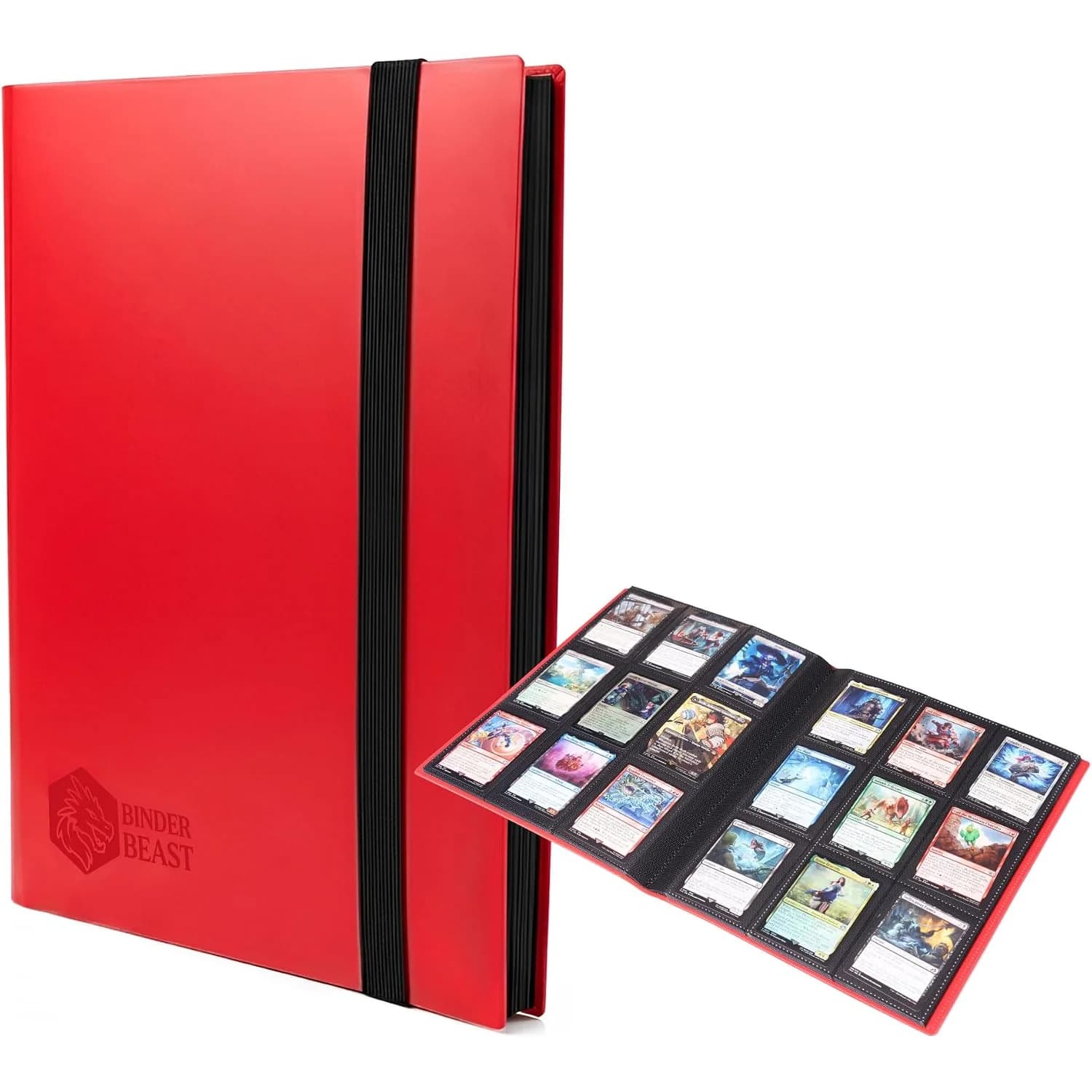
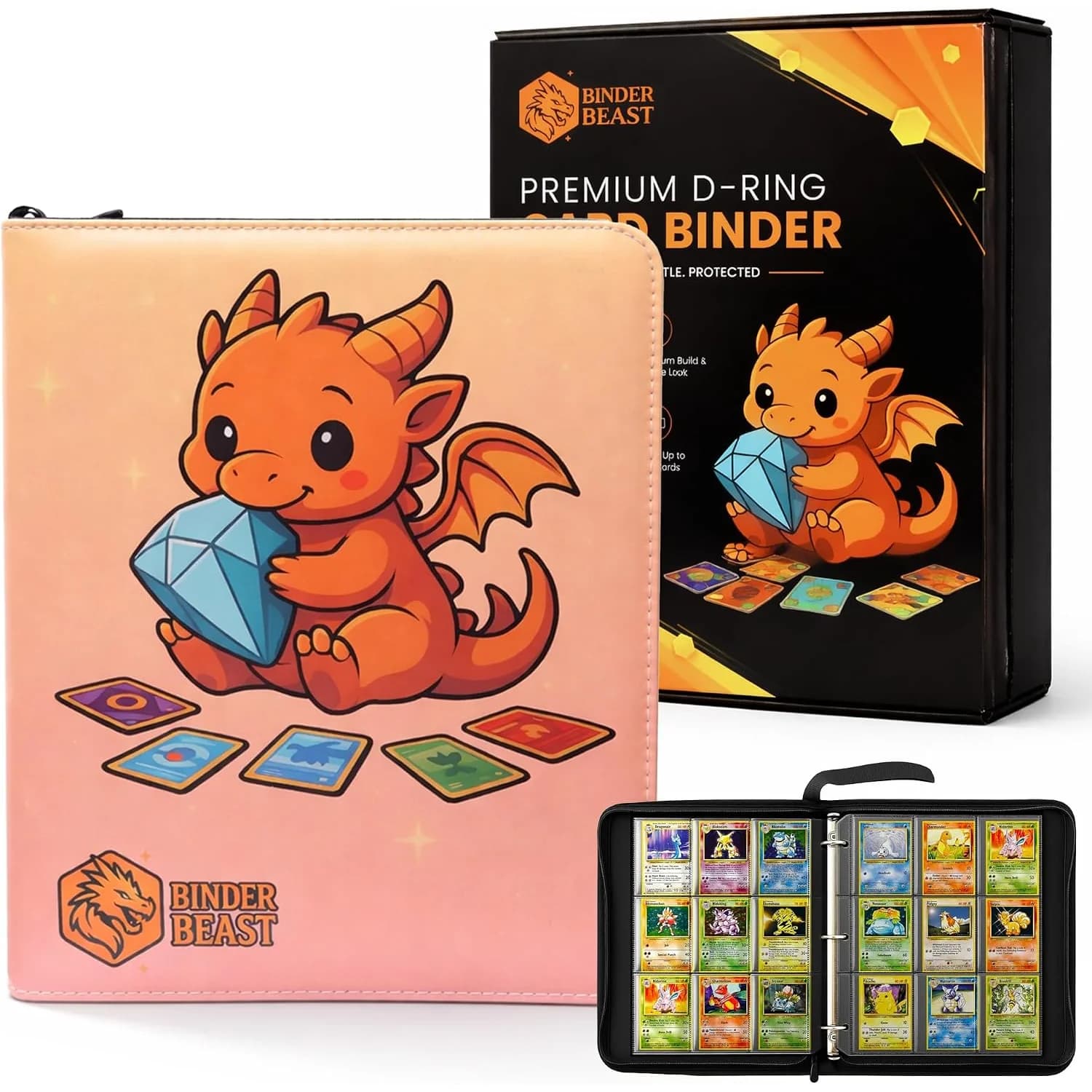
If you're moving your best cards out of a box, the Sleek 9-Pocket Binder (in black or red) holds 360 cards across 20 fixed, double-sided pages with side-loading, acid-free polypropylene pockets, plus a water-resistant hardcover and an elastic strap. It fits standard 63 × 88 mm cards sleeved or unsleeved. If your collection is growing fast, the Dragon 9-Pocket Zip Binder holds up to 900 cards on a D-ring, so you can add or rearrange pages, and closes with a full zip. You can compare both on our shop page.
Final thoughts
It isn't really binder versus box – it's binder and box, each doing the job it's best at. Keep the cards you love and value on show in a binder, file your bulk in a box, and your whole collection stays easier to enjoy and better protected.
Find the right binder
360 to 900 cards, water-resistant covers, free UK delivery over £25.
Shop binders