
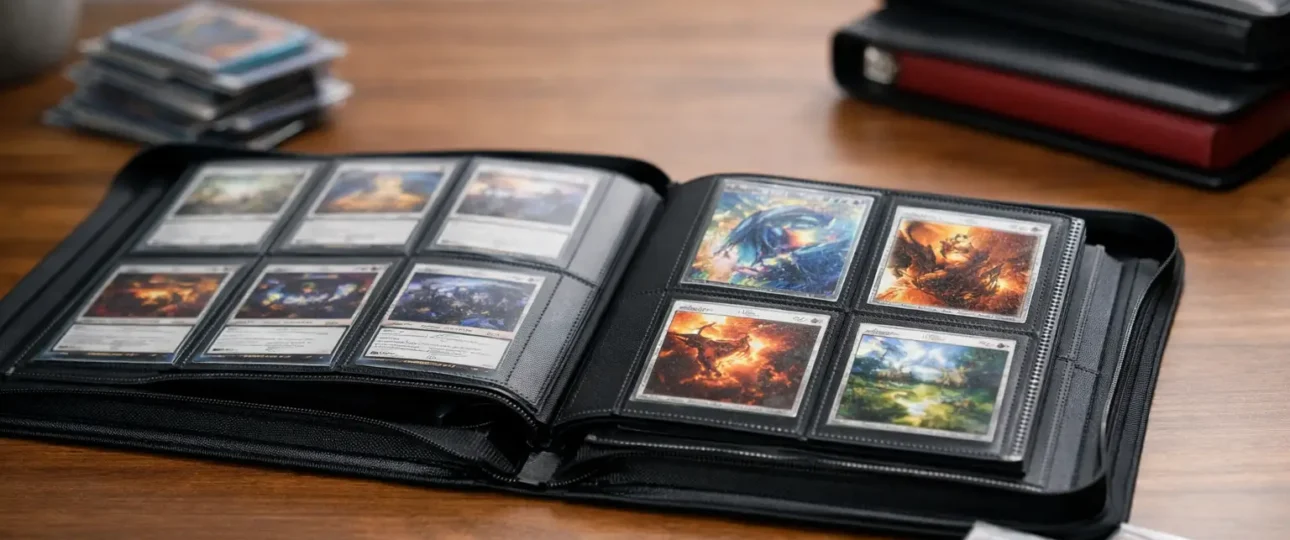
A prized holo should not be one loose card away from a bent corner, a drink spill, or a chaotic pile at the bottom of a rucksack. So, are trading card binders worth it? For most collectors, absolutely – provided you choose one built to protect cards rather than simply hold them.
A proper trading card binder gives your collection a safe home, makes it easier to enjoy, and cuts down the everyday risks that slowly damage cards over time. The value is not just in storing hundreds of cards in one place. It is in being able to find that card, show it off, transport it, and put it back without worrying about scuffs, folds, or lost pages.
What a good binder actually protects against
Cards take most of their damage during ordinary handling. Sorting through a box, carrying a deck to a local event, lending a binder to a friend, or moving a collection between rooms can all create opportunities for scratches and bent edges. A quality binder brings order to those moments.
Individual pockets keep cards separated, so surfaces are less likely to rub together. Sturdy pages prevent cards from sliding around, while a firm cover shields the collection from knocks when it is on a shelf or travelling with you. A secure zip or elastic closure also keeps the binder shut when it is in a bag.
That does not mean every card belongs in a binder. A high-value graded card is usually better in its slab and suitable protective case. Likewise, valuable raw cards may deserve a penny sleeve and a rigid holder for long-term storage. But for complete sets, trade cards, favourite pulls, deck cores, lower-value foils, and cards you want to browse regularly, a binder is one of the most practical protection upgrades you can make.
Are trading card binders worth it for every collector?
It depends on how you use your cards. If you own a small handful of cards and rarely handle them, a modest storage box may be enough. If your collection is growing, however, the case for a binder gets much stronger. Loose stacks become difficult to organise, and repeatedly searching through them adds unnecessary wear.
Binders are especially worthwhile for collectors who want a visual collection. Pokémon set collectors can arrange pages by card number. Yu-Gi-Oh! players can keep trade stock, staples, and deck options visible. Magic: The Gathering players can separate Commander pieces or colour-based collections. Sports card collectors can build player, team, season, or rookie pages that look clean and intentional.
There is an enjoyment factor too. A binder turns cards you own into a collection you can actually see. Instead of keeping hits hidden in a box, you can open a cover and take in a full page of favourite artwork, rare parallels, or completed set cards. For children starting a collection, that visibility also makes it far easier to keep cards tidy.
The features that separate a collector binder from a basic album
Not all binders deserve the same level of trust. A cheap office-style binder with loose plastic pages can work temporarily, but it has weaknesses. Rings can press against pages, page holes can tear, and cards may shift if the pockets are too loose. Materials can also feel thin, which matters when the binder gets dropped or carried around.
A collector-focused binder should feel purposeful from cover to pocket. Look first for a durable outer shell. Water-resistant PU leather offers a polished finish and helps protect against light splashes and everyday grime. It is not a licence to leave your collection in the rain, but it provides far more confidence than a bare cardboard cover.
Next, consider the pockets. Crystal-clear, top-loading pockets make it easy to view cards while helping reduce the chance of cards slipping out when the binder is upright. The pockets should fit standard-size trading cards securely without forcing them in. If you use penny sleeves, check that the pocket dimensions allow sleeved cards to sit comfortably rather than bowing the page.
Closures matter more than they seem. A zip closure offers strong all-round security for a binder that travels to events, school, mates’ houses, or trade nights. An elastic closure is quicker to use and keeps the profile neat for collections mainly stored at home. Either option is a major step up from leaving pages exposed.
For collectors who prefer flexible organisation, a D-ring format can be a smart choice. It allows you to add, remove, or rearrange pages as your set grows. The trade-off is that you need to handle the rings carefully and avoid overfilling them. Fixed-page binders have fewer moving parts and often feel more streamlined, making them excellent for a dedicated set or display collection.
Choose capacity around your collecting habits
Capacity sounds straightforward, but bigger is not always better. A 4-pocket binder is compact, easy to carry, and brilliant for younger collectors, trade binders, or a carefully selected personal collection. Four-pocket pages also give each card more visual space, which can make special cards feel more like a display.
A 9-pocket binder is the familiar choice for set builders and collectors with larger libraries. It lets you see more cards per page, makes numerical set organisation simple, and can hold substantial collections without taking over a shelf. A 400-card binder is a strong everyday format, while a 900-card option suits serious set collecting, large trade inventories, or multiple deck collections.
Do not buy based only on the biggest number. A completely packed 900-card binder is heavier than many collectors expect. If you attend events often, two smaller binders may be easier to carry and quicker to sort through. One can hold your personal collection, while the other handles trades, duplicates, and cards you are actively moving.
A binder is not a substitute for careful storage
Even premium protection works best alongside good habits. Keep binders upright or flat on a stable shelf, away from direct sunlight, moisture, and major temperature swings. Avoid piling heavy objects on top, especially if the binder is full. Heat can affect card condition, while pressure can bend pages and create dents along the edges of cards.
When adding cards, make sure your hands are clean and dry. Slide each card into the pocket gently rather than forcing it past the opening. For foil cards, rare cards, or anything you would be upset to replace, a penny sleeve inside the binder pocket adds a sensible extra layer against surface wear.
It also pays to leave a little breathing room. Overstuffing a binder strains pockets, makes pages buckle, and can put pressure on cards near the spine. If pages no longer turn easily, it is time for another binder, not more force.
When spending more makes sense
The right binder is not about buying the most expensive option available. It is about matching protection to the cards and the way you collect. A basic binder may be perfectly fine for common duplicates that never leave home. But if you have spent time, money, and effort building a collection, flimsy storage is a false economy.
Premium materials, secure closures, stable page layouts, and clear pockets solve real collector problems. They help protect condition, reduce sorting time, and give your cards the presentation they deserve. A Binder Beast binder, for example, is designed around those practical details: sleek protection, useful capacity, and a format that looks as good on a shelf as it feels in hand.
The best test is simple. If opening your binder makes it easier to find, protect, carry, and enjoy your cards, it has earned its place in your collection. Choose the capacity you will genuinely use, keep the pages sensibly filled, and give your favourite cards somewhere worthy of the pull.