
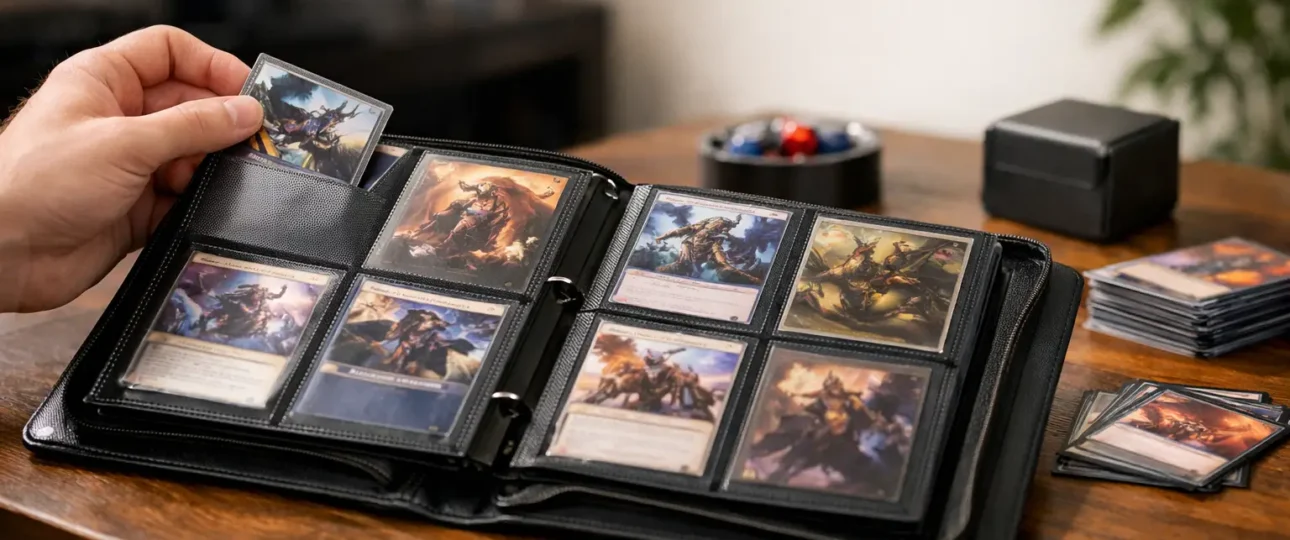
A bent corner after one trip to locals is usually all it takes to stop treating storage as an afterthought. If you collect seriously, a top loading card binder is not just about keeping cards together. It is about reducing handling damage, keeping pages tidy, and making your collection easier to browse without that loose, shifting feel cheaper binders often have.
For Pokémon, Yu-Gi-Oh!, Magic: The Gathering, and sports cards, the binder you choose affects more than appearance. It affects how often cards catch on pocket edges, how securely they stay in place during travelling, and whether your collection still looks sharp months down the line. That is why top-loading designs have become a smart choice for collectors who want proper protection with clean presentation.
What is a top loading card binder?
A top loading card binder stores cards in pockets that open at the top of each slot. You slide the card down into the pocket rather than pushing it in from the side. It sounds like a small difference, but for collectors, it changes how the binder handles in real use.
Top-loading pockets can feel more natural when you are sorting cards by set, rarity, team, or deck build. You lift the page, slide the card in, and move on. For many collectors, that is faster and less fiddly than side-loading pockets, especially when reorganising a growing collection.
That does not mean top-loading is automatically better for every situation. Side-loading pockets have their own strengths, particularly when paired with zip closures for added spill resistance. But a well-made top-loading binder with secure pages and a proper outer closure can still offer excellent protection while giving you easier access and a more traditional binder feel.
Why collectors choose a top loading card binder
The biggest advantage is ease of use. If you are adding new pulls, moving cards between sections, or building pages for trades, top-loading pockets make the process simple. Cards slide in quickly, and you spend less time fighting tight openings or awkward angles.
There is also a strong display benefit. A top loading card binder often lays out a collection in a clean, familiar format that feels great for browsing. For collectors who enjoy flipping through full pages of holos, vintage rares, inserts, or favourite players, that matters. Protection is vital, but so is the experience of actually enjoying the collection.
Capacity plays a part too. Whether you prefer a compact 4-pocket format for smaller sets and easy portability or a 9-pocket layout for larger archives, top-loading binders are available in both styles. That gives collectors more control over how they store cards based on collection size and how often the binder leaves the house.
Where top-loading binders perform best
A top loading card binder is especially useful for home organisation, trade nights, and collectors who regularly update pages. If your collection changes often, quick-access pockets make life easier. You can sort by expansion, by card type, or by personal favourites without turning a simple update into a chore.
They also suit younger collectors and gift buyers. Not everyone wants a storage system that feels overly technical. A top-loading binder is easy to understand, easy to use, and still capable of offering strong protection when the build quality is there.
For sports cards and standard-size TCG cards, a premium binder with crystal-clear pockets, a stable page layout, and a secure closure gives a strong balance of usability and protection. It looks smart on a shelf, travels well, and keeps your collection ready to show.
What features matter most in a top loading card binder?
Not all binders deserve space in your collection. A weak cover, flimsy pages, or loose construction will show up quickly, especially if you take your cards out and about. When comparing options, the real difference is in how the binder is built.
Pocket clarity and page stability
Collectors want to see their cards properly. Cloudy plastic dulls the look of foils, artwork, and signatures. Clear pockets help your collection look the way it should, whether you are checking condition or simply enjoying the display.
Page stability matters just as much. If pages sag, wrinkle, or shift too easily, cards can move more than they should. A better binder keeps each page sitting flat and consistent, so the collection feels neat rather than messy.
Closure type
Top-loading pockets benefit from an outer closure. That could be a zip or a strong elastic band, depending on the binder design. Without one, the binder is more exposed during transport, and pages can spread if handled roughly.
If you travel to events, a zip closure offers more reassurance. If your binder mostly stays at home and you want quicker access, an elastic closure may be enough. It depends on how mobile your collection is.
Cover material
A water-resistant outer cover is one of those features that sounds optional until it saves your cards from a spilled drink or damp bag. PU leather is a popular choice because it gives a cleaner, more premium finish than basic plastic while adding another layer between your collection and the outside world.
For collectors who care about presentation, the cover also affects how the binder feels on a shelf or table. A premium exterior does not just look better. It reinforces that this is proper storage, not a throwaway album.
Ring system or fixed pages
This is one area where preference matters. D-ring binders let you add, remove, and reorganise pages, which is useful if your collection changes often. Fixed-page binders can feel slimmer and more secure because the pages are built into the binder itself.
Neither option is universally better. D-rings offer flexibility. Fixed pages offer simplicity. If you are building set binders and like to rearrange sections, rings may suit you. If you want a tidy grab-and-go binder for a completed collection or trade folder, fixed pages can be the smarter fit.
Top loading card binder vs side-loading binder
This is where many collectors hesitate, and fairly enough. Both styles have a place.
A top loading card binder tends to win on convenience. It is quicker to fill, easier to update, and familiar to collectors who grew up using traditional card albums. If you regularly sort cards and want simple access, it is a strong option.
A side-loading binder often appeals to collectors focused on maximum card retention during transport. Because the opening sits towards the spine or side, cards may be less likely to slip if the binder is shaken or stored awkwardly. That can be useful for heavy travel or very high-value pages.
The trade-off comes down to use case. For a home collection, trading binder, or regularly updated album, top-loading is often the more practical choice. For collectors who prioritise spill resistance and movement control above all else, side-loading may edge ahead. Build quality decides the real winner either way.
Choosing the right size for your collection
Pocket layout changes how a binder feels in day-to-day use. A 4-pocket binder is compact, easier to carry, and often better for younger collectors, smaller collections, or premium cards you want to browse without handling a huge album.
A 9-pocket binder makes more sense if you are storing larger sets, maintaining playsets, or building full visual pages. It takes up more space, but it gives you that complete, gallery-style presentation many collectors want.
Capacity matters, but it should not be the only decision point. A 900-card binder sounds great until it becomes heavy, awkward, or overfilled. Sometimes two smaller binders are a better long-term solution than one oversized one. Serious collectors usually end up caring as much about access and handling as total storage numbers.
Who should buy a top loading card binder?
If you want fast access, clean display, and reliable everyday protection, this style makes sense. It suits collectors who enjoy arranging pages, showing off favourite cards, and carrying a binder to game nights, trade meet-ups, or weekends away.
It is also a strong fit for gift buyers who want something that feels premium without being complicated. A good binder is one of those products that gets used straight away and appreciated over time.
For collectors who want storage that looks sharp, feels dependable, and does not make card organisation a hassle, a well-built top-loading binder earns its place quickly. That is exactly why Binder Beast focuses on collector-grade features that protect properly while still making your collection easy to enjoy.
The best binder is the one that fits how you actually collect, not just how the product page sounds. Choose one that keeps your cards secure, makes sorting easy, and gives your collection the kind of presentation it deserves.