
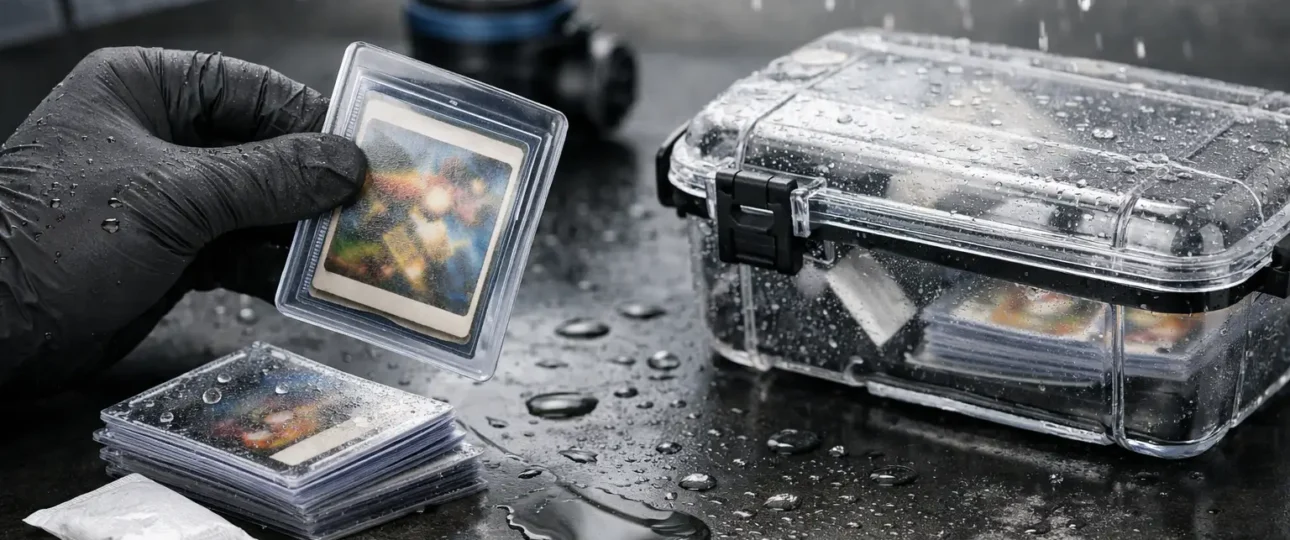
A curled foil, softened card stock or faint tide mark can turn a great pull into a frustrating lesson. Knowing how to protect cards from moisture is not just about avoiding a spill on the table. It is about controlling the damp air, condensation and everyday handling risks that slowly affect a collection long before anything looks obviously wet.
For Pokémon, Yu-Gi-Oh!, Magic: The Gathering and sports card collectors, the goal is simple: keep cards dry, flat, clean and ready to enjoy. A few smart storage choices make a serious difference, whether you are protecting a childhood binder or a growing collection of valuable singles.
Why moisture is hard on trading cards
Trading cards are made from layered paper-based stock. When that stock absorbs humidity, it can expand unevenly. The result may be warping, rippling, softened corners or a card that no longer sits flat in a pocket. Foil cards are especially prone to curling because their paper and foil layers react differently to changes in moisture and temperature.
The risk is not limited to direct water. A binder left near a steamy kitchen, a box stored in a garage, or cards carried from a cold car into a warm room can all encounter damp conditions. Condensation is the quiet threat here. Moisture can form inside a bag, binder or storage box when temperatures shift quickly, even if rain never touches your cards.
Water-resistant storage buys you time against splashes and light rain. It is not a reason to leave a collection outdoors, in a damp shed or on a wet floor. The strongest protection comes from combining a good binder with a dry, stable storage routine.
How to protect cards from moisture at home
Start with the room where your collection lives. A dry indoor cupboard, wardrobe or shelf away from exterior walls is usually a better choice than a loft, cellar, garage or conservatory. These spaces commonly experience bigger swings in heat and humidity, which is exactly what card stock does not need.
Keep binders and boxes raised off the floor. Even a small leak, a knocked-over drink or damp rising through a poorly insulated floor can damage the lowest part of a collection first. A high shelf is ideal, but a sturdy storage unit works well too. Leave a little breathing room around your binders rather than pressing them against a cold wall.
Avoid placing cards near radiators, windows, bathrooms and kitchens. Heat can dry cards too aggressively and encourage curling, while window condensation and steam introduce unwanted moisture. Aim for a comfortable, consistent room temperature rather than trying to make the room overly dry.
If your home is naturally humid, a small dehumidifier can help protect more than cards. A simple humidity monitor is useful if you have a large or high-value collection. For most collectors, keeping relative humidity roughly around 40 to 55 per cent provides a sensible, stable target. The priority is consistency: repeated swings are often more troublesome than a brief period slightly outside that range.
Use layers of protection, not one product
A binder cover alone cannot protect an unsleeved card from humidity, fingerprints and pocket friction. Likewise, a sleeve does little against a drink tipped over an open page. Build protection in layers so one mishap does not become permanent damage.
For cards you want to display and browse, use a clean, well-fitting sleeve before placing each card in a binder pocket. Sleeves reduce surface scuffs and create a modest extra barrier between the card and surrounding air. Make sure cards are fully dry and free of dust before sleeving them. Sealing in moisture, even from damp hands or a wet tabletop, defeats the point.
A quality card binder adds the next layer. Look for crystal-clear, top-loading pockets that hold cards securely and keep them from sliding out when a binder is moved. A water-resistant PU leather cover helps shield the pages from minor splashes, while a zip closure offers better all-round protection during storage and travel than an open binder. Elastic closures are practical for lighter use, but a zip is the stronger option if you regularly carry cards in a rucksack.
For valuable singles that are not being displayed in a binder, use a sleeve and rigid holder, then store that holder in a dry card box. Do not overpack boxes or binder pockets. Pressure can bend corners, distort pages and make it harder to remove cards without damage.
Keep moisture out when travelling
Tournament days, card shows and trades are when collections face the most unpredictable conditions. You might leave a dry home, walk through rain, spend hours in a warm venue and then return to a cold car. That temperature change matters as much as the weather outside.
Put your binder inside a clean bag before travelling, especially if rain is possible. Do not place it loose at the bottom next to drinks, wet coats or food. A zip-closed binder with a water-resistant exterior offers a strong first defence, but the outer bag adds valuable protection if your rucksack gets soaked.
When you arrive somewhere much warmer or colder, do not immediately open a cold binder in a humid room. Let it sit closed for a short time so it can adjust gradually. This reduces the chance of condensation settling on pocket pages or cards. The same rule applies after bringing cards in from a cold delivery box during winter.
If a binder gets lightly wet on the outside, wipe the cover with a soft, absorbent cloth and leave it closed until the exterior is dry. If water has reached the pages, remove the cards carefully and lay them in a clean, dry space. Do not use a hairdryer, place cards on a radiator or press them under heavy books while wet. Fast heat and pressure can cause more warping or make pages stick together.
Watch for the small habits that cause damage
Moisture protection is often won or lost at the table. Never sort cards beside a drink, even one with a lid. Condensation on the outside of a cold can or bottle can leave just as much water as a small spill. Keep refreshments on a separate surface and make sure children know that binders stay away from snack and drink areas.
Wash and dry your hands before handling cards. This is not about treating a collection like a museum piece. It is a simple way to avoid transferring moisture, oils and food residue onto corners and surfaces. If you have just come in from rain or cold weather, give your hands time to warm and dry fully.
Be cautious when buying cards from other collectors. Check for a musty smell, wavy card edges, stuck pages or a cloudy look inside sleeves. These can signal prior damp exposure. A card may look fine under poor lighting but reveal warping once it is placed on a flat table.
What to do if cards are exposed to water
Act calmly and quickly. Separate cards that are touching, remove them from wet sleeves or pages, and gently blot visible surface water with a clean, lint-free cloth. Do not rub. Rubbing can scuff the card surface, catch an edge or spread ink if the card is already saturated.
Lay cards flat in a dry room with good airflow, away from direct sun and heat. Keep them apart so air can circulate. Once completely dry, inspect each card before putting it into a fresh sleeve. Reusing a damp sleeve or returning cards to a damp pocket invites mould and further warping.
For a large spill or a high-value card, professional conservation advice may be worth considering before attempting any flattening method. Home fixes found on social media can be risky, particularly for foils, autographs and vintage cards. Prevention will always be safer than trying to reverse water damage.
Choose storage built for the collection you have
Your best setup depends on how you use your cards. A child building a favourite Pokémon collection may need a durable, easy-to-browse 4-pocket binder that stays protected in a bedroom. A player travelling to events may prioritise a compact zip binder. A collector organising hundreds of cards may prefer a 9-pocket format with enough capacity to avoid cramming pages.
Binder Beast binders are designed around that balance of collector-grade protection and practical use, with water-resistant covers, secure closures and clear pockets that make a collection look as sharp as it is protected. Whatever format you choose, check that the cards fit comfortably, pages turn cleanly and the binder can be stored upright without crushing the contents.
A dry, stable home and a properly protected binder let you focus on the good part of collecting: opening packs, finishing sets, trading confidently and enjoying every card at its best.