
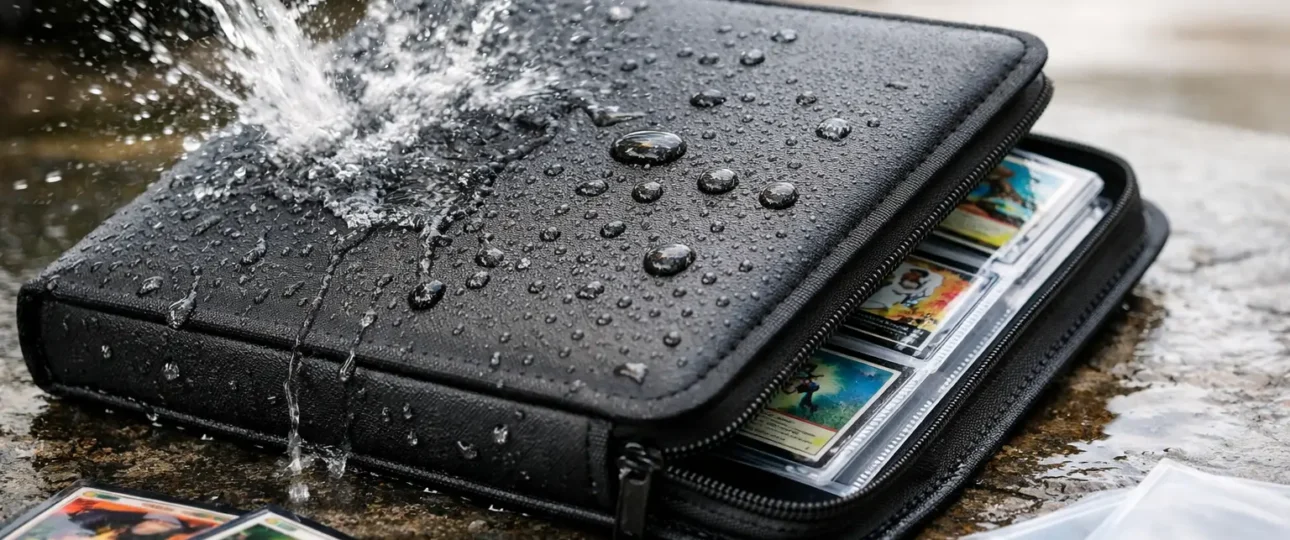
A knocked-over drink at the table. A damp backpack after the walk to locals. A binder set down on a kitchen counter that looked dry but was not. Most card damage does not come from one dramatic disaster. It comes from ordinary moments like these, which is exactly why a water resistant card binder earns its place in a serious collection.
For collectors, protection is never just about storage. It is about keeping corners sharp, surfaces clean and pages easy to browse without adding risk every time you travel, trade or reorganise. The right binder does more than hold cards. It creates a barrier between your collection and the kind of everyday moisture that quietly ruins value.
What a water resistant card binder actually does
A water resistant card binder is built to reduce the chance that light moisture reaches the cards inside. Usually, that starts with the outer cover. Materials such as PU leather or coated synthetic finishes help repel splashes, light rain and the dampness that builds up in bags and cars. That does not make the binder waterproof, and that distinction matters.
Water resistant means the binder can handle normal collecting life better than a basic cardboard album or a thin fabric folder. If you catch a spill quickly or get stuck walking through drizzle, the cover gives you time. Waterproof suggests complete protection under heavy exposure, and most card binders are not designed for that. If a binder is submerged or left in standing water, the risk to pages and cards rises fast.
That is the real value here. A water resistant binder is not magic. It is practical protection against realistic hazards.
Why collectors choose water resistant protection
Trading cards face more environmental risk than many collectors realise. The obvious threats are spills and rain, but moisture also shows up in less dramatic ways. A cold drink inside the same bag. Humidity after a long day at an event. A binder stored near a window, in a loft, or in a room that runs damp during winter.
Even small amounts of moisture can create problems. Pages may start to feel tacky. Card sleeves can trap condensation. Covers can warp. Once that happens, cards shift, bind, or pick up surface marks from pressure and friction. If you collect holo cards, premium inserts, autographs or older foils, you already know those details matter.
This is where a premium binder starts to separate itself from a generic album. Better materials, a more stable structure and a secure closure all work together. It is not only about keeping water out. It is also about keeping the internal environment more controlled while you carry, store and show your collection.
The features that matter most in a water resistant card binder
Not every binder with a smooth outer cover offers the same level of protection. If you are comparing options, look beyond the headline claim.
Water-resistant outer material
The cover is your first line of defence. PU leather is a popular choice because it looks clean, feels premium and helps repel light moisture better than paperboard or untreated fabric. It also tends to hold its shape well, which matters if your binder travels often.
That said, material alone is not enough. A weak zip seam or exposed page edge can still leave your cards vulnerable.
Zip closure or secure elastic band
A zip closure gives the best all-round security for many collectors. It helps keep out dust, reduces the chance of cards sliding free and adds another layer between your cards and outside moisture. Elastic straps are still useful, especially for lighter home use, but they do not seal the binder in the same way.
If you travel to tournaments, trade nights or school, a zip usually makes more sense.
Top-loading pockets
Pocket design affects more than convenience. Top-loading pockets help keep cards securely in place if the binder is moved around, tipped or packed tightly in a bag. Combined with sleeves, they create a more stable setup that reduces movement and accidental edge wear.
Side-loading pockets also have their fans, especially for display-focused collections, but top-loading layouts remain a strong choice for straightforward access and reliable card retention.
Strong page construction
Pages should be clear, firm and evenly welded. Cheap pages can ripple, stick or split under pressure, especially when they are exposed to changing temperatures or moisture. Crystal-clear pockets make a visible difference too. If you are proud of the collection, the binder should let it look its best without sacrificing protection.
Capacity matters more than most buyers expect
Collectors often focus on cover material first, then regret choosing the wrong size. A water resistant card binder only works well if it suits the way you collect.
A 4-pocket format is compact, easier for younger collectors to handle and ideal for smaller sets, favourite cards or travelling light. A 9-pocket binder gives you a more traditional display layout and suits larger collections, set building and more serious sorting. If you are storing hundreds of cards, capacity becomes part of protection. Overfilling a binder creates pressure on pockets, strains the spine and increases the chance of bent cards.
It is smarter to buy for the collection you are building, not just the one you have today. A binder that comfortably holds 400 or 900 cards gives you room to grow without cramming pages and hoping for the best.
When water resistance matters most
Some collectors need this feature more than others, but few regret having it.
If you attend events regularly, carry trade stock, or move your cards between home and shop, water resistance becomes a practical essential. The same goes for younger collectors. Kids are enthusiastic, but not always careful. A more protective binder gives parents and gift buyers extra peace of mind without making the hobby feel precious or off-limits.
Sports card collectors and TCG players also benefit because their cards are often handled, shown and transported more often than a display-only collection. The more movement involved, the more useful a durable outer shell becomes.
Home collectors should not dismiss it either. Spills happen at desks, coffee tables and gaming nights. A binder that can shrug off the occasional splash is simply a better long-term storage choice.
What a water resistant card binder cannot fix
This is where honest comparison matters. Water resistance is a strong feature, but it does not replace good storage habits.
It will not protect cards from full immersion. It will not stop humidity damage in a badly stored room. It will not make up for overstuffed pockets, loose pages or cards inserted without sleeves if your collection needs extra care. If you own high-value singles, double sleeving and sensible storage conditions still matter.
Think of the binder as part of a protection system. The better the binder, the stronger that system becomes. But no single feature does all the work on its own.
How to choose the right water resistant card binder
Start with your cards. Standard-size trading cards such as Pokémon, Yu-Gi-Oh!, Magic: The Gathering and most sports cards need a binder designed around that format, not a general photo album or office folder. Then consider how often the binder leaves the house.
For daily use or frequent travel, prioritise a water-resistant PU cover, a zip closure and sturdy pages. For shelf storage and occasional browsing, you may place more value on presentation, slimness and page count. If the binder is a gift, ease of use matters too. A clean layout, smooth page turning and a size that is not awkward to carry make a real difference.
The best choice usually sits in the middle of three things: enough capacity, strong materials and a format that matches how you collect. When those line up, the binder feels less like an accessory and more like proper kit.
Water resistant card binder buyers should think long term
A cheap binder can look fine on day one. The problem shows up later, when the cover creases, the pockets cloud over, or the closure weakens just as the collection starts to grow. Replacing a poor binder costs more than buying well in the first place, especially if cards pick up damage during the switch.
That is why serious collectors tend to favour binders built for the hobby rather than generic stationery options. The details are better thought through. The fit is better. The protection is more credible. Brands such as Binder Beast have built their appeal around that exact point – giving collectors storage that looks sharp, travels well and stands up to real use.
If your cards matter to you, your binder should do more than keep them in one place. It should help them stay clean, flat and ready to show off, whether they live on a shelf or travel with you every week. A water resistant card binder will not stop every possible accident, but it gives your collection a much better chance when everyday life gets messy.