
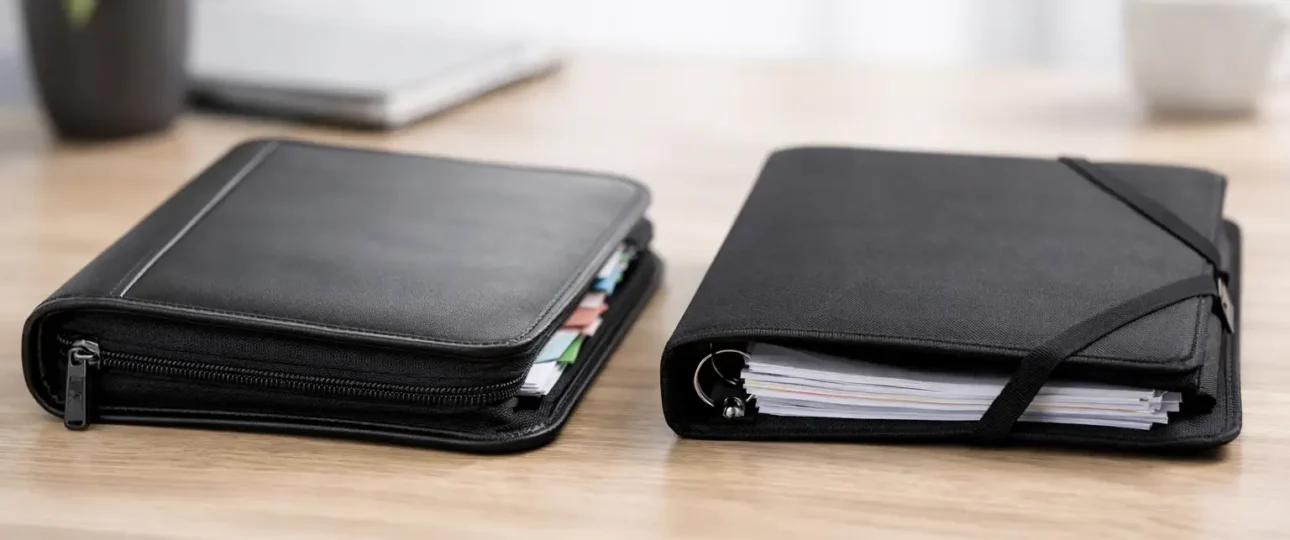
One loose page in a packed card bag is all it takes to turn a clean collection into a frustrating mess. That is why the zip binder vs elastic binder question matters more than it first appears. For trading card collectors, the closure is not a small detail. It affects protection, portability, daily use, and how confident you feel carrying valuable cards from home to trade night.
If you collect Pokémon, Yu-Gi-Oh!, Magic: The Gathering, or sports cards, both binder styles can work well. The better choice depends on how you store your cards, how often you travel with them, and how much risk you are willing to accept around dust, movement, and accidental opening. A closure is not just about convenience. It is part of the binder’s protection system.
Zip binder vs elastic binder: the real difference
At a glance, the difference seems obvious. A zip binder closes all the way around with a zip. An elastic binder uses a stretch band to keep the cover shut. In practice, the gap is bigger than that.
A zip binder creates a more complete barrier around your pages. When the zip is shut, the binder stays tightly closed on all sides, which helps keep cards protected from dust, light splashes, and page edges catching on other items in a backpack. It also reduces the chance of the binder opening by accident if it gets squeezed during travel.
An elastic binder is simpler and quicker. You pull the band over the cover and you are done. That makes it easy for collectors who are constantly flipping through pages, updating sets, or showing cards to friends. It feels lighter, faster, and less formal. For many casual collectors, that convenience is a genuine advantage.
The trade-off is security. Elastic keeps a binder closed, but it does not seal it in the same way a zip does. If the binder is overfilled, compressed, or carried around often, an elastic closure usually leaves more room for the cover to flex and for page edges to shift slightly inside.
When a zip binder is the stronger choice
If your collection includes cards you would hate to replace, zip usually comes out ahead. That is especially true for higher-value pulls, favourite pages, signed cards, or carefully built sets you want to keep in sharp condition.
A zip binder gives you more confidence in transit. Whether you are taking cards to a local event, carrying a trade binder, or simply storing your collection on a shelf where it gets handled often, a zip closure helps everything stay contained. The pages sit more securely, and there is less chance of the binder opening in a rucksack or car boot.
It also suits collectors who care about long-term presentation. A fully closed binder looks tidy, feels premium, and gives the collection a more protected, display-ready finish. For many hobbyists, that matters. Cards are not just items to store. They are pieces of a collection you have spent time and money building.
There is another practical benefit. Zip binders pair especially well with water-resistant outer materials because the whole format is built around stronger all-round protection. No binder is fully disaster-proof, but a zipped design generally gives you a better line of defence against everyday knocks, travel friction, and accidental spills.
Where elastic binders still make sense
Elastic binders are not the budget option by default, and they are not automatically worse. For some collectors, they are the better fit.
If you are constantly opening your binder, an elastic closure is simply faster. That matters for younger collectors, casual set builders, and anyone who likes to browse their collection often without the extra step of unzipping and rezipping every time. For children especially, the simpler opening style can feel easier to manage.
Elastic binders can also feel less bulky. If you want a cleaner, lighter format for at-home use, or you mainly use your binder to organise standard cards rather than transport a more valuable collection, elastic can be a practical choice. It does the basic job well when the binder is not being pushed hard.
The key phrase is at-home use. Once a binder starts travelling regularly or carrying cards you are serious about protecting, the limitations of elastic become more noticeable.
Protection matters more than convenience for most collectors
Collectors often focus on pocket style, page count, and capacity first. Those are important, but closure style deserves a place near the top of the list. A great pocket layout loses value if the binder can open too easily or if the outer structure does not hold the pages securely enough while moving.
For serious collecting, protection usually beats speed. A zip binder adds a small amount of effort each time you open it, but it returns that effort in peace of mind. That is a strong trade for anyone storing holos, vintage cards, tournament staples, or sentimental pulls.
Elastic closures are fine when your risk level is low. If the binder mostly stays on a shelf and only comes out for casual viewing, the difference may not feel dramatic day to day. But as soon as the binder starts going in and out of bags, getting handled at events, or carrying cards with real value, the extra security of a zip becomes easier to justify.
Zip binder vs elastic binder for travel and tournaments
This is where the decision becomes clearer. If you travel with your cards, a zip binder is usually the smarter buy.
Tournament players, traders, and collectors who bring cards to shops or meet-ups need a binder that stays shut under pressure. Bags get dropped. Other items press against the cover. Binders get pulled out quickly and packed away again. In that environment, a zip closure is more dependable.
Elastic can still work for lighter travel, but it relies more on the binder staying neatly packed and not being overstuffed. That is fine until it is not. A stretched band, a slightly warped cover, or a packed bag can all reduce how securely the binder stays closed.
For younger collectors taking cards to a friend’s house, either option may be enough. For older hobbyists carrying trade stock or cards with real resale value, zip usually feels like the safer standard.
What about capacity and page pressure?
Closure style also affects how a full binder behaves. When a binder gets close to capacity, the pages and cover naturally push outward. A zip closure generally manages that pressure better because it holds the whole structure together more evenly.
An elastic closure can still keep a full binder shut, but it often creates more tension at one central point rather than across the full edge. Over time, that can make a packed binder feel less stable, especially if pages are loaded heavily or handled often. This does not mean elastic binders fail quickly. It means they are less forgiving when collectors push them to their limits.
That matters for 4-pocket and 9-pocket formats alike. A compact binder with fewer cards may perform well with either closure. A larger-capacity binder, especially one built for hundreds of cards, benefits more from the added control of a zip.
Which binder looks and feels better?
This comes down to preference, but many collectors see zip binders as the more premium option. They tend to feel more structured, more deliberate, and better suited to valuable collections. If you like your storage to look as good as the cards inside, zip has a strong edge.
Elastic binders can still look sleek, especially with a clean cover design, but the visible band gives them a slightly more casual feel. Some collectors prefer that. Others want a binder that looks closer to a protective case than a simple album.
For a brand like Binder Beast, where protection and presentation go hand in hand, that premium feel is not cosmetic fluff. It is part of what makes a binder satisfying to use over time.
So which should you choose?
If your binder will mostly live at home, gets opened constantly, and holds lower-risk cards, an elastic binder can do the job without fuss. It is quick, simple, and easy to live with.
If you want stronger all-round protection, better travel security, and a more collector-grade feel, a zip binder is the better choice. For most serious collectors, that added protection is worth it.
The best binder is the one that matches how you actually collect, not just how you imagine you will. If your cards matter enough to sort carefully, sleeve properly, and carry with caution, a zip closure is usually the smarter long-term move.
Choose the binder that makes you feel calm when your collection leaves the shelf. That is usually the right answer.