
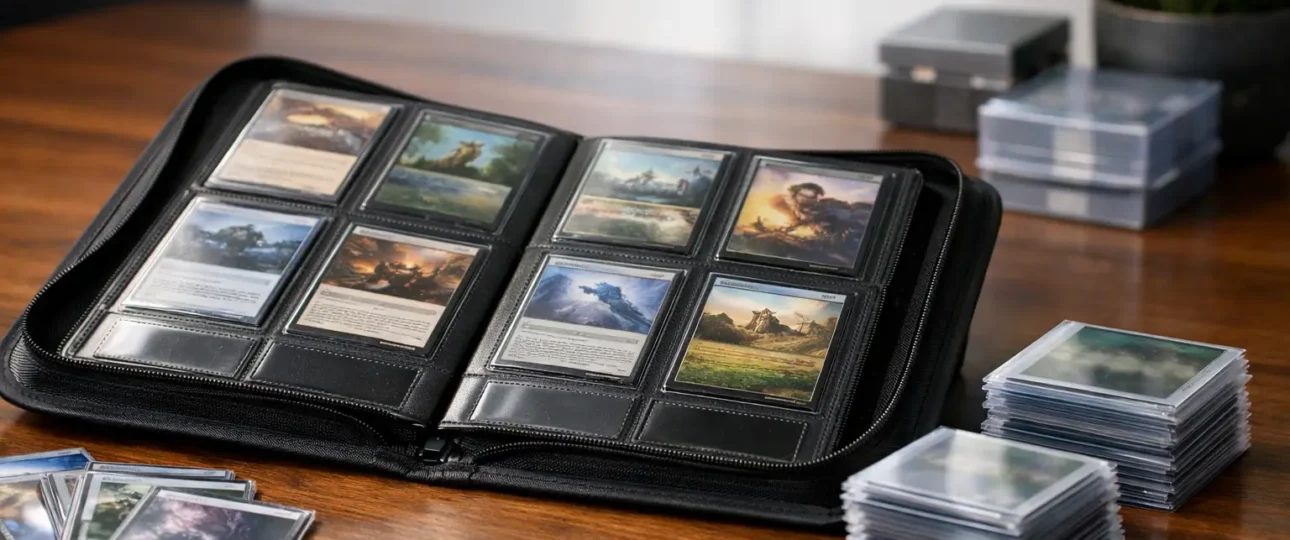
A card only needs to catch on a rough pocket edge once to turn a mint copy into a regret. That is why choosing the right binder for sleeved cards matters more than most collectors expect. If you sleeve your Pokémon pulls, keep your Magic staples tournament-ready, or want sports cards stored cleanly without the usual album wobble, the binder itself has to work with the sleeve rather than against it.
A lot of standard card albums look fine until you start loading real collections into them. Sleeved cards sit thicker, taller and slightly less forgiving than raw cards. That changes everything – pocket fit, page strain, how the binder closes, and whether the whole setup still feels secure when you carry it.
What makes a binder for sleeved cards actually work?
The first thing is obvious but often overlooked: pocket sizing. A binder that handles unsleeved cards neatly can become frustrating fast once penny sleeves, inner sleeves or deck sleeves enter the picture. If the pockets are too tight, cards catch as they go in and corners take the hit. If the pockets are too loose, cards shift about and the pages lose that clean, aligned look collectors want.
Top-loading pockets are especially useful here because they let sleeved cards slide in with less resistance while still keeping the visible face clear and tidy. For collectors who flip through binders often, that matters. You want a pocket that feels controlled, not one that turns every insert into careful surgery.
The second factor is page stability. Sleeved cards add weight. On a lightly built binder, pages can sag, bow or ripple once you start filling it properly. That is where a better page structure and stronger overall build earn their keep. Whether you are storing set collections, trade stock or favourite hits, the binder should still sit square when partly full and when packed near capacity.
Then there is the outer shell. If you travel to locals, league nights, trade days or bigger events, your binder gets exposed to more than just shelf life. Bags get dropped. Drinks get knocked. Weather turns. A water-resistant cover and secure closure are not luxury extras for collectors – they are practical protection.
4-pocket or 9-pocket binder for sleeved cards?
This depends on how you collect, not just how many cards you own.
A 4-pocket binder for sleeved cards usually suits collectors who care about portability, premium presentation and easier handling. It feels compact in the hand, fits into a backpack more neatly and is less awkward to browse at a table. If you are carrying selected trades, showcase cards or a smaller master set, 4-pocket layouts can feel more controlled and less bulky.
A 9-pocket binder for sleeved cards makes more sense when capacity matters. If you are building large sets, sorting by team, archiving full playsets or simply want fewer binders on the shelf, a 9-pocket format gives you much more room without changing your whole storage system. It is the practical choice for bigger collections, but there is a trade-off. Once filled with sleeved cards, a 9-pocket binder becomes heavier and less convenient for casual carrying.
Neither format is better in every case. The right one depends on whether your priority is display and transport or maximum storage density.
The features that matter most
Collectors tend to compare capacity first, but capacity only tells part of the story. A binder can hold a lot of cards and still be annoying to use. For sleeved collections, the better test is how the binder performs under real conditions.
Pocket design and clarity
Crystal-clear pockets do more than improve presentation. They make it easier to identify variations, foil patterns, condition details and print differences without removing the card. For TCG collectors and sports card collectors alike, that saves time and reduces unnecessary handling. The pocket should also keep the card face flat enough to look clean, not cloudy or distorted through cheap plastic.
Closure type
A zip closure gives the strongest overall sense of security. It keeps pages contained, helps prevent dust from getting in and reduces the chance of cards slipping free if the binder is jostled in transit. Elastic straps are simpler and lighter, and many collectors like them for everyday use, but they do not offer the same full-edge protection as a zipped design.
If you mainly store binders at home, either can work. If your collection travels regularly, zip usually wins.
Cover material
A premium PU leather outer gives a binder a sharper look, but appearance is only half the value. It also adds structure and helps resist wear better than flimsy cardboard-style covers. A more rigid exterior protects corners and keeps the binder feeling substantial over time, especially when pages are loaded with sleeved cards.
Ring style or fixed pages
D-ring binders appeal to collectors who want flexible organisation. You can add, remove or rearrange pages as your collection changes, which is useful if you are actively sorting sets or refining a display order. The caution is ring alignment. Poorly made ring binders can pinch pages or create pressure points.
Fixed-page binders often feel cleaner and more secure for long-term storage because the layout is built in and there is less internal movement. If your goal is simple protection and easy browsing, many collectors prefer that stability.
Why cheap binders fail sleeved collections
The weak point is rarely obvious on day one. It usually shows up after the binder has been filled for a few weeks.
The pockets start stretching unevenly. Pages no longer turn smoothly. The cover warps. An elastic loosens. Card rows begin to lean. None of that feels dramatic until you realise your collection no longer feels protected – it just feels stored.
That distinction matters. Serious collectors do not sleeve cards just to drop them into a flimsy album. Sleeving is already one layer of care. The binder should reinforce that effort, not cancel it out with poor fit and weak materials.
A proper upgrade is less about flashy branding and more about consistency. The pages should hold shape. The closure should stay reliable. The binder should look good enough to display and strong enough to trust when you need to move it.
Choosing the right binder for your type of collection
Pokémon collectors often need a binder that balances display and protection. Full-art cards, promos and chase pulls deserve pockets that show them clearly while still keeping sleeved edges safe. A neat 4-pocket format can be brilliant for favourites, while larger set builders may prefer a 9-pocket option with higher capacity.
Yu-Gi-Oh! collectors should pay close attention to fit. Smaller card dimensions can behave differently in generic pockets, especially once sleeves are involved. A binder that keeps cards sitting neatly without excessive movement is worth prioritising.
Magic: The Gathering players usually have different needs again. If the binder is for trade stock, staples or sideboard options, portability matters. If it is for long-term collection storage, durability and page stability matter more. Sports card collectors often lean towards presentation and clean sorting, making clear pockets and a more premium exterior especially appealing.
This is why there is no single perfect answer. The best binder for sleeved cards is the one that matches how your collection is used, not just how it looks in product photos.
What to check before you buy
Look closely at the stated capacity and ask a simple question: is that realistic for sleeved cards, or only comfortable for raw cards? There is a big difference. You should also check the loading style, closure, cover material and whether the binder is built for travel or mainly shelf storage.
It is also worth thinking ahead. Collections grow. A binder that feels oversized today can feel exactly right a few months later. On the other hand, buying the biggest option every time is not always smart if you only want to carry selected pages to events. Good storage is not only about maximum volume. It is about using the right format for the job.
For collectors who want sleek protection for serious collecting, a premium binder with strong pockets, a secure closure and a durable outer shell is usually the safest bet. That is the difference between basic storage and collector-grade confidence.
Binder Beast builds around that reality – protection first, clean presentation close behind, and no wasted features that look nice but do little for the cards.
A good binder should make you less nervous about handling your collection, not more. If your cards are already sleeved, finish the job with storage that respects the effort you have put into protecting them.