
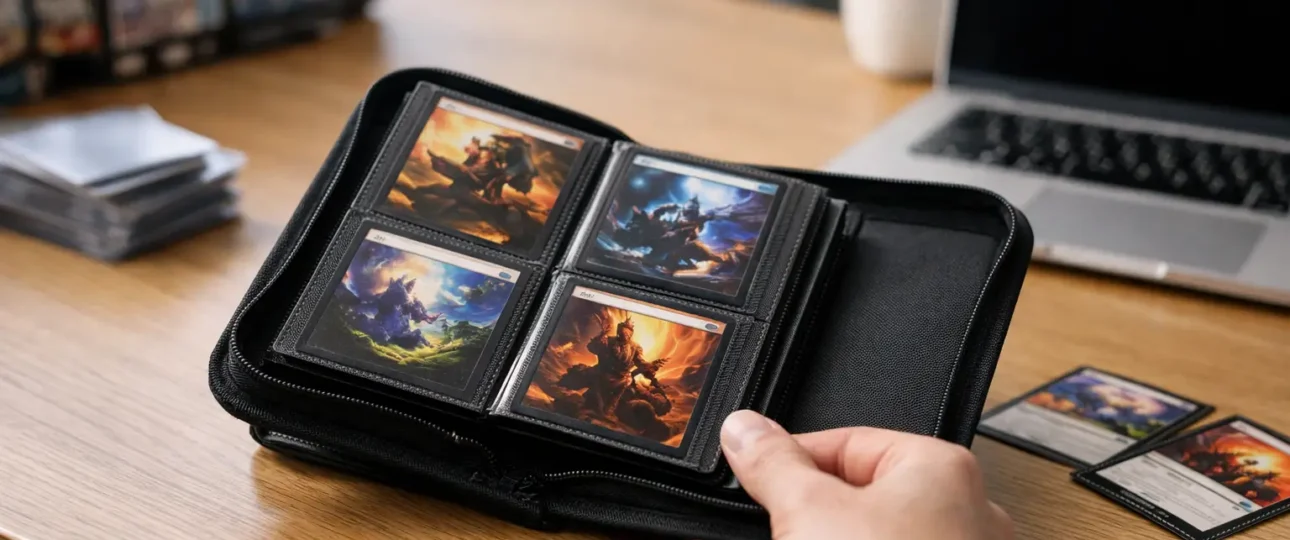
A binder that is too bulky gets left on the shelf. A binder that is too flimsy puts corners, edges and surfaces at risk. That is why the 4 pocket card binder has become such a smart choice for collectors who want proper protection without carrying half their collection everywhere they go.
For many collectors, this format hits the sweet spot. It is compact, easy to handle, and far more practical than oversized albums when you are sorting a growing set, taking favourites to a trade night, or keeping a smaller collection in top condition. But it is not automatically the best option for everyone. The right binder depends on how you collect, how you store your cards, and how often those cards leave the house.
Why collectors choose a 4 pocket card binder
A 4 pocket card binder is built around a simple layout – four cards per page side, usually in a 2 x 2 arrangement. That smaller page format changes the whole experience. The binder feels lighter in the hand, easier to pack, and less awkward to flip through than larger alternatives.
That matters more than people think. If you are carrying cards to a local event, showing a trade binder to friends, or helping a younger collector keep things tidy, a compact binder is just easier to live with. It takes up less space in a bag, sits neatly on a shelf, and does not encourage overstuffing in the way larger binders often do.
There is also a presentation benefit. A smaller page makes each spread feel focused. Instead of scanning through nine cards at once, you get a cleaner look at playsets, favourite pulls, character pages, or themed sections. For Pokémon, Yu-Gi-Oh!, Magic: The Gathering, and sports cards, that tidy visual layout can make a collection feel more intentional.
When a 4 pocket card binder is the better choice
If your collection is selective rather than massive, this format makes a lot of sense. Some collectors are not trying to archive every card they own. They want a home for hits, decks, chase cards, signed cards, trades, or a carefully chosen part of a master set. In that case, a huge binder can feel like wasted space.
A 4 pocket card binder also suits collectors who value portability. Taking cards to a tournament, club, convention, or a mate’s house is very different from storing cards long term in a cupboard. A smaller binder travels better. It is easier to hold, easier to zip away, and less likely to shift around when packed tightly with other gear.
It is also a strong option for younger collectors. A child handling a heavy, oversized binder can bend pages, drop the binder, or strain the spine simply because the format is too large for them. A smaller binder is more manageable and often leads to better card habits from the start.
Where the trade-offs start
Compact does not mean perfect. The biggest trade-off is capacity. If you are building large sets, storing multiple decks, or trying to archive hundreds upon hundreds of cards in one place, a 4-pocket layout may feel limiting. You might end up splitting one collection across several binders, which is fine for some collectors and irritating for others.
There is also the question of viewing speed. A 9-pocket format lets you scan more cards at once. If you regularly compare pages, display full sets in wider runs, or prefer a traditional album feel, a larger format may suit you better.
This is where it depends on your priorities. If your goal is maximum storage efficiency, bigger binders usually win. If your goal is better handling, easier travel, and a tighter presentation, the 4-pocket format often comes out ahead.
Protection matters more than pocket count
Collectors sometimes focus so much on page layout that they miss what actually protects the cards. A poor-quality binder with the right pocket count is still a poor-quality binder.
The first thing to look for is pocket design. Top-loading pockets are a strong choice because they help stop cards from slipping out when the binder is carried upright or turned during use. That extra security matters whether you collect modern holo cards, older favourites, or sports cards with condition-sensitive surfaces.
The next factor is material quality. A water-resistant outer cover adds real value, especially if the binder is going into backpacks, cars, or event bags. Premium PU leather also gives the binder a cleaner, more collector-grade finish than the thin plastic feel of bargain albums.
Closure style matters as well. A zip binder offers stronger all-round security because the pages and cards stay enclosed when the binder is not in use. Elastic closures are still useful, but they do not provide the same full-edge protection if the binder is dropped or pressed against other items.
Page stability is another point serious collectors should not ignore. Pages that sit flat and hold their shape reduce unnecessary movement inside the binder. Less shifting means less rubbing, and less rubbing means a better chance of preserving surfaces over time.
Sleeves, fit and real-world use
Most collectors are not storing raw cards straight into binder pockets and hoping for the best. They are using penny sleeves, deck sleeves, or other protective sleeves first. That means fit matters.
A good 4-pocket binder should comfortably hold standard-size trading cards in sleeves without forcing the pockets to stretch or bunch. Pokémon, Magic: The Gathering, Yu-Gi-Oh!, and most standard sports cards are usually the target here, but sleeve thickness can vary. Thicker premium sleeves add protection, yet they also take up more room across a full binder.
That is another place where quality construction shows up. Better pockets stay clear, hold shape, and allow sleeved cards to slide in without feeling loose. Cheap pages often go cloudy, wrinkle under pressure, or grip too tightly. None of that inspires confidence when you are storing cards that actually matter to you.
Who should skip the 4-pocket format?
If you are building very large archive binders or want every expansion in one matching format, you may be happier with a bigger option. The same goes for sellers or traders who need to display a broad range of stock at once. In those cases, page density can be more useful than portability.
Collectors focused on full set completion also sometimes prefer larger binders because the layout can make numbering and sequencing feel more efficient. That does not make the 4-pocket format wrong – it just means the smaller format suits curated collections better than giant archives.
What to look for before you buy
Not every binder earns a place near valuable cards. If you are choosing a 4-pocket model, pay attention to build details rather than just capacity claims on the product page.
Look for a binder with clear, top-loading pockets, a tough outer shell, and a secure closure. Check whether it is designed for standard-size cards and whether the pages are built in or arranged with rings. Built-in pages are often preferred for travel because they avoid the shifting that can come with lower-quality ring systems, though some collectors still like D-ring styles for custom organisation.
It is also worth thinking about how you collect six months from now, not just today. If you are buying for a starter collection, a child, a deck project, or a travel binder, the 4-pocket size is often exactly right. If your collection is already sprawling across boxes and tins, it may work better as a secondary binder for top cards rather than your only storage solution.
For collectors who want sleek protection for serious collecting, Binder Beast-style features such as water-resistant covers, crystal-clear pockets, and travel-friendly designs are the kind of upgrades that make a real difference in daily use.
The best use for a 4 pocket card binder
The strongest case for this binder is not that it stores the most cards. It is that it stores the right cards well. Favourite pulls, active trades, personal sets, match-ready decks, or cards you actually want to view and carry – that is where this format shines.
A good binder should make collecting feel more organised, not more awkward. If a larger album feels cumbersome, a compact format can bring your collection back into regular use. And if your cards matter to you, the right binder is not a small detail. It is part of how you keep the hobby looking sharp for the long run.
Choose the size that matches how you collect now, but also how you want to enjoy your cards next week, next month, and next season.