
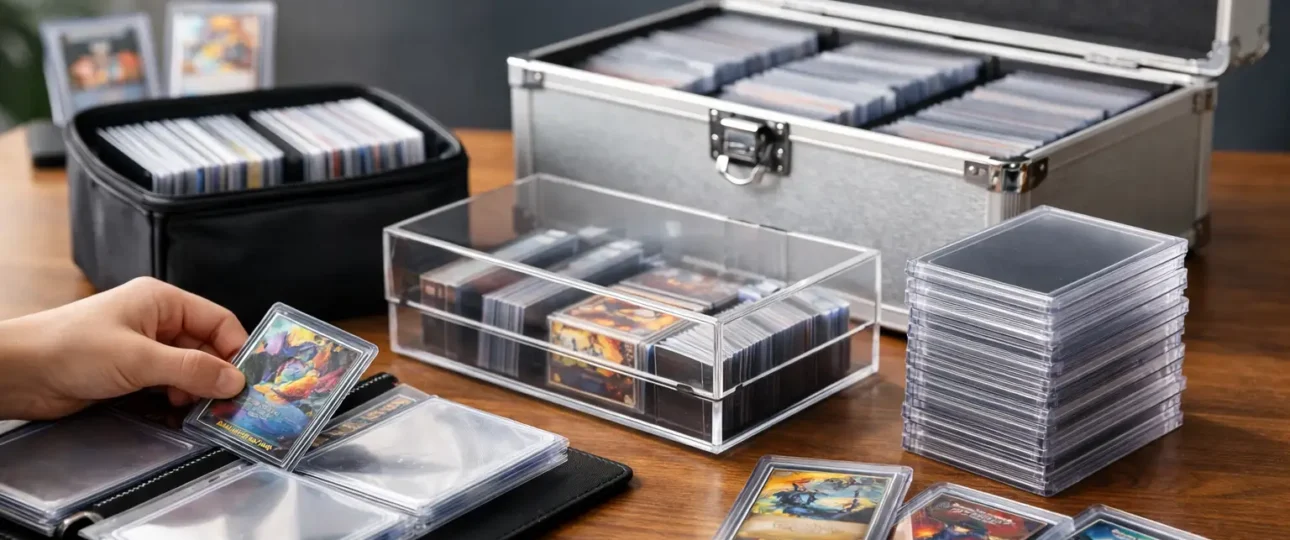
A mint pull can lose its edge fast if it ends up in a warped binder, a damp loft, or a box that shifts every time you move it. If you collect Pokémon, Yu-Gi-Oh!, Magic: The Gathering or sports cards, learning how to store trading cards safely is not just about keeping things tidy. It is about protecting condition, preserving value, and making sure your collection still looks sharp years from now.
Good storage does three jobs at once. It shields cards from physical damage, keeps them organised, and makes them easy to enjoy. The right setup depends on what you collect and how you use it. A child building a favourite Pokémon binder needs something different from a tournament player carrying decks every weekend, and both need something different from a collector storing higher-value singles long term.
How to store trading cards safely at home
Start with the biggest threats. Trading cards are vulnerable to bending, corner wear, surface scratching, moisture, heat, dust and careless handling. Most damage does not happen in dramatic fashion. It happens slowly – cards rubbing against each other in a loose box, pages sagging under too much weight, or humidity creeping in over time.
That is why the safest home setup usually combines sleeves with a proper storage format. For display and browsing, a binder is hard to beat. For bulk cards or duplicates, storage boxes make more sense. For especially valuable cards, rigid holders can add another layer of protection. The key is matching the level of protection to the card’s importance and how often you handle it.
If you want to look through your collection regularly, side-loading or top-loading binder pockets with a secure closure are a strong choice. A well-made binder keeps cards flat, separated, and protected from dust. Features like a water-resistant cover and zip closure are especially useful if the binder gets moved around the house or taken out to events.
Choose sleeves before you choose storage
No matter where the card ends up, the first line of defence is usually a sleeve. Sliding unsleeved cards straight into a binder or box increases the risk of scratches and edge wear. Soft penny sleeves are a solid starting point for standard cards, while tighter inner sleeves or premium outer sleeves may suit more valuable singles.
There is a trade-off here. Double-sleeving adds protection, but it also adds thickness. That matters in binders, where overstuffed pockets and packed pages can create pressure marks or page bulge. If you are filling a binder close to capacity, check that your sleeving choice still allows pages to sit flat.
For children or newer collectors, simple is often better. A clean sleeve and a reliable binder will prevent far more damage than an overcomplicated system that never gets used properly. For higher-end cards, especially anything you might grade or trade later, taking the time to sleeve carefully is worth it.
Binders vs boxes: what is safer?
Neither is automatically better. It depends on the cards and how you interact with them.
Binders are ideal for sets, favourites, trade pages and cards you want to view easily. They make organisation simple and they help keep cards flat when the binder is well built and not overfilled. A premium binder also protects against everyday hazards better than a cheap office folder with loose pages. Strong covers, crystal-clear pockets, stable page layouts and secure closures all reduce risk.
Boxes are better for bulk storage, spare holos, deck-building stock and anything you do not need to browse often. They can be very safe if cards are sleeved, stacked neatly, and stored upright without being crushed. The weak point is movement. If cards slide around in a half-empty box, edges can suffer. If a box is packed too tightly, corners can catch when cards are removed.
For many collectors, the best answer is both. Keep your main collection in a quality binder and your overflow or duplicate stock in storage boxes. That setup gives you protection without sacrificing practicality.
Avoid the common binder mistakes
A binder can be one of the safest ways to store cards, but only if you use it properly. Ring binders are convenient for rearranging pages, yet they can become a problem when pages shift or sit too close to the rings. Cards near the inner edge may catch or bend if the binder is handled roughly. That does not mean ring binders are unusable, but it does mean you need to pay attention to page quality, ring alignment and how full the binder gets.
Fixed-page binders reduce some of that risk because there are no rings to interfere with cards. They are often a stronger choice for collectors who want stable, long-term storage. A zip closure adds another level of security by helping keep out dust and preventing cards from slipping out during travel.
Do not cram extra cards into pockets designed for one card. Do not stack binders flat under heavy items. And do not leave a binder in direct sunlight near a window, radiator or in the boot of a car for hours. Heat and pressure are silent collection killers.
The room matters more than most collectors think
Even the best sleeves and binders cannot fully protect cards from a bad environment. Temperature swings and humidity are serious risks, especially for foils, older cards and anything stored long term. Excess moisture can lead to warping, while heat can accelerate bending and weaken materials.
The safest place to keep trading cards is in a cool, dry room with a stable temperature. Bedrooms, studies and living rooms are usually safer than lofts, garages, sheds or basements. Avoid storing cards against exterior walls if the room is prone to damp. Keep them off the floor in case of spills or minor flooding.
Sunlight is another issue collectors underestimate. Direct sun can fade colours over time, and even indirect bright light adds unnecessary exposure. If your collection is on display, choose a shaded area and keep valuable pieces protected inside sleeves or binder pockets.
How to store valuable cards safely
Once a card crosses from favourite pull to serious asset, your storage should tighten up. A high-value single deserves more than the same treatment as a common duplicate. At minimum, sleeve it properly. Depending on the card, you might then place it in a semi-rigid holder, a toploader, or a dedicated premium binder pocket where it will not move around.
What matters most is limiting handling and reducing pressure. If you are constantly taking the card out to admire it, photograph it, or show it around, the storage method will only do so much. Safe storage starts the moment the card leaves your hands.
Some collectors prefer to keep expensive cards in a separate binder from their general collection. That can be smart. It reduces the chance of frequent browsing affecting your best pieces, and it makes insurance records or sale prep easier if you ever need them.
Travelling with cards without damaging them
Taking cards to a local game night, trade meet or tournament creates a different kind of risk. At home, the danger is mostly environmental. On the move, it is impact, shifting and accidental spills.
For travel, secure closures matter. A zip binder or snug elastic strap helps stop pages from opening in a bag. Water-resistant outer materials add peace of mind if the weather turns or a drinks bottle leaks. Compact formats are also worth considering. A smaller 4-pocket binder can be easier to carry safely than a larger overfilled album, especially for younger collectors.
Keep binders upright in your bag where possible and avoid packing them next to hard, heavy items. If you carry decks, dice and accessories together, make sure nothing can press into the binder cover. Serious collectors often damage cards not at the table, but on the walk there.
Build a storage system you will actually maintain
The safest setup is the one you will use consistently. If your cards are constantly ending up on desks, beds or kitchen tables because your storage is awkward, it is not working. A good system makes it easy to put cards away properly every time.
That usually means separating your collection by purpose. Main set cards can live in a display-ready binder. Trades can go in a lighter-access binder. Bulk can be boxed and labelled. High-value singles can be kept in a more protected section. This kind of structure keeps handling down because you are not constantly rifling through everything to find one card.
It is also worth checking your collection every so often. Look for signs of page stress, warping, damp, or overfilled sections. A quick review now can prevent permanent damage later. Serious collectors do not wait for visible damage before tightening their storage.
A premium binder from a collector-focused brand such as Binder Beast can make that process easier because the design is built around real hobby use, not generic office storage. Better materials, clearer pockets and secure closures are not just cosmetic upgrades. They help reduce the risks that damage cards over time.
If you care about condition, treat storage as part of collecting, not an afterthought. The right sleeves, the right binder or box, and the right room will do more for your cards than any last-minute rescue after damage has started. Give your collection a proper home now, and future you will be glad you did.